
Introduction:
Smart Maintenance for Rotary Drum Filtration begins with understanding how these machines quietly carry the load inside modern process plants. Rotary drum screens are the silent workhorses – no spotlight, no noise, no excuses.
They run day after day, handling pulp slurry, wastewater solids, recycled fiber, plastics, grit, bark, and whatever else enters the line. When they slow down, entire units feel the impact. When they run well, they boost recovery rates, protect downstream equipment, and keep plant uptime stable.
This is why Smart Maintenance for Rotary Drum Filtration is not optional – it’s essential. Maintenance today is more than cleaning, greasing, or checking for wear. Plants need proactive routines, quick inspections, and design choices that prevent shutdowns before they happen.
At Multitech Engineers, we build rotary drum screens for tough sectors like pulp & paper, starch, sugar, chemicals, and wastewater treatment. We also see firsthand how the right maintenance discipline can double equipment life while keeping fiber recovery consistent.
This guide shares the same practical checklist we give to plant teams during commissioning, audits, and troubleshooting visits.
How It Works: Inside a Modern Rotary Drum Screen
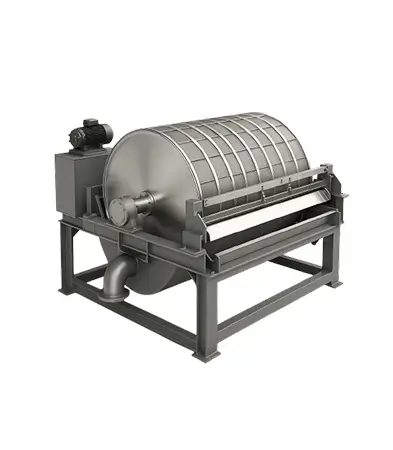
The rotary drum screen is a rotating cylindrical unit lined with wedge wire or perforated screening surfaces.
The working principle is simple but engineered for performance:
- The pulp slurry enters the rotating drum at controlled pressure.
- The drum lifts and spreads the fibers uniformly.
- The first 30% of the drum focuses on maximum drainage.
- The remaining 70% gently separates fines from solids.
- Heavy debris (plastics, knots, bark) moves toward the discharge end.
- The screened pulp or white water passes through the wedge wire and is collected underneath.
- A high-pressure spray system continuously cleans the screen.
This design is similar to other high-efficiency filtration methods you may have used—like incline vs rotary systems, explained here:
👉 Incline vs Rotary Screens: How to Choose the Right Fit
Standard Technical Configuration (Multitech Engineers):
- Screen Type: Cylindrical rotating wedge wire
- Slot Opening: 0.25 mm – 2.0 mm (customizable)
- Inclination: 3° to 6°
- Material: SS 304 / SS 316L
- Drive: Chain or direct shaft-driven motor, VFD-enabled
- Spray System: High-pressure flat-cone nozzles
- Capacity: Engineered per flow rate and fiber load
This design works because it balances three things:
Filtration efficiency, consistent throughput, and long mechanical life.
Ideal Applications Across Industries
While rotary drum screens are widely known in the pulp & paper sector, they’re equally valuable in several industries:
| Industry | Use Cases |
|---|---|
| Pulp & Paper | Coarse and fine pulp screening, fiber recovery, removal of knots, plastics, bark, heavy debris |
| Water & Wastewater | Primary screening, solids separation, grit removal |
| Sugar & Starch | Starch slurry screening, juice clarification |
| Recycling Plants | Plastic washing lines, fiber-plastic separation |
| Food Processing | Fruit pulp removal, vegetable wash water screening |
Plants choose rotary drum screens because the drum design handles fluctuating flow and solids load better than static screens or vibrating units.
Multitech’s Engineering Strength in Rotary Drum Filtration
Every industry has its own screening challenges – fiber load, contaminant type, pH, temperature, and daily operating hours.
Multitech Engineers builds rotary drums that adapt to these variables.
Our Custom Engineering Capabilities
- Custom drum diameters and lengths
- Wedge wire profiles optimized for fine or coarse separation
- SS304 / SS316L construction for corrosive pulp environments
- Modular designs for retrofits and tight installation spaces
- VFD-driven motors for speed optimization
- Heavy-duty support frames and wear liners
- Nozzle layout engineered for complete screen washing
- Low-maintenance spray bar assemblies
- Long-life bearings and minimal moving parts
Plants choose us because we design screens for real operating conditions, not ideal ones.
For a deeper understanding of wedge wire capability, you can also explore:
👉 Customizing Your Wedge Wire Screen for Peak Performance
Smart Maintenance for Rotary Drum Filtration: Key Practices That Extend Life
This is the core of your blog. Below is a practical and actionable checklist your buyers will value.
A. Inspect Slot Cleanliness Daily
Wedge wire slots gradually clog with fibers, plastics, and fines. Clogged slots reduce throughput and increase load on the drum.
Daily routine:
- Check 4–5 fixed reference locations on the drum surface
- Monitor slot visibility
- Inspect spray nozzles for proper pressure
A partially blocked drum can reduce efficiency by up to 30%.
For similar challenges with wedge wire, see:
👉 Why Your Wedge Wire Screen Is Slowing Down Production
B. Maintain Optimal Spray Pressure
The spray system is the heart of self-cleaning.
If pressure drops:
- Cleaning becomes uneven
- Fiber starts accumulating
- Drum weight increases
- Motor load rises
Weekly checks:
- Verify nozzle angle
- Confirm nozzles are not worn
- Check pump pressure responsiveness
- Remove scale from the spray bar
C. Monitor Drive Load and Vibration
A rotary drum should run quietly and with minimal vibration.
If vibration increases, it can signal:
- Uneven fiber buildup
- Bearing wear
- Chain slack
- Drum imbalance
A simple handheld vibration measurement device can prevent major failures.
D. Check the Inlet Distribution
A drum screen works best when the flow enters uniformly.
Poor flow distribution causes:
- Overload on one side
- Uneven wear
- Fiber bypass
- Unpredictable drainage
Keep the inlet spreader clean and aligned.
E. Maintain Slot Size Accuracy
Slot openings shift over time due to:
- Abrasive pulp
- Heavy contaminants
- Chemical attack
Visually inspect for slot widening or bent profiles.
Wider slots reduce separation accuracy and fiber recovery—a common issue we also discuss in:
👉 Quality Matters: Identifying a High-Performance Wedge Wire Screen
F. Inspect the Bearings & Seals Monthly
Bearings take continuous radial load. If lubrication schedules are ignored, replacement costs rise.
Monthly routine:
- Check lubrication
- Listen for noise
- Inspect seals for pulp ingress
A seized bearing can halt the entire line.
G. Use VFD Speeds Intelligently
Variable speed control is not just a feature – it’s a tool.
Adjust speed when:
- Pulp consistency changes
- Fiber load increases
- Production speed varies
- Finer separation is required
Lower speed = better drainage
Higher speed = better cleaning and particle rejection
Performance Metrics That Matter (Plant-Level KPIs)
| Metric | Typical Values |
|---|---|
| Slot opening | 0.25–2.0 mm |
| Inclination | 3°–6° |
| Drive speed | VFD-controlled |
| Solids removal efficiency | 70–90% depending on feed |
| Fiber recovery (P&P) | Up to 95% |
| Nozzle pressure | As recommended per design |
| Motor load | Should remain stable |
Tracking these KPIs weekly avoids larger issues.
How to Choose the Right Rotary Drum Screen
Ask these questions before finalizing a unit:
- What is the inlet flow rate?
- What pulp consistency or solids load do you handle?
- Do you need coarse screening or fine screening?
- Slot opening—0.25, 0.5, 1.0, or 2.0 mm?
- Will you run 24/7 or in batches?
- Do you require SS304 or SS316L?
- Do you need a fully enclosed housing?
- What is your available space for installation?
- Do you need VFD control?
- What is your cleaning water pressure availability?
Plants that choose correctly save years of maintenance effort.
For a related comparison, see:
👉 Rotary Drum Screens in Paper Mills
Conclusion:
Smart Maintenance for Rotary Drum Filtration only works when the equipment itself is built to support it.
A rotary drum screen performs at its best when maintenance is simple, structured, and predictable.
When plants track the right parameters, follow steady cleaning routines, and monitor wear patterns, downtime drops sharply.
At Multitech Engineers, we build rotary drum filtration systems that make this possible — durable wedge wire surfaces, accurate slot openings, efficient spray layouts, and robust mechanical components.
If you want a rotary screen that delivers stable throughput and consistent filtration year after year, we can help you size and design the right unit for your plant.
Contact us. Our team is here to help. We understand your requirement and deliver the right wedge wire screen.