From Design to Disaster: How Small Slot Variations Create Massive Process Losses

In many industrial plants, screening equipment is often treated as a “fit-and-forget” component. If flow looks stable and there is no visible damage, the assumption is simple: the screen is doing its job.

But in reality, some of the most damaging process losses don’t come from visible failures. They come from tiny dimensional errors—often measured in microns—that quietly compound into quality loss, efficiency drop, and rising operating costs.

One of the most underestimated of these errors is slot variation in wedge wire screens.

The Common Misconception: “0.05 mm Won’t Make a Difference”

A widely held belief in process plants is that a small slot size deviation—say 0.05 to 0.1 mm—is insignificant. On paper, it looks harmless. In isolation, it may even appear acceptable.

However, most screening systems operate in continuous duty:

  • 16–24 hours a day
  • High flow volumes
  • Constant solid loading

In such conditions, even a minor deviation doesn’t stay minor for long.
What starts as a small dimensional inconsistency becomes a multiplier of loss, accumulating hour after hour, day after day.

What “Slot Variation” Really Means in Practice

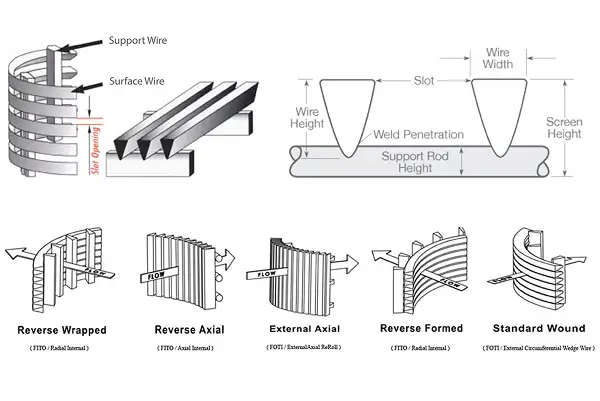
Slot variation is not just about the number written on a drawing. It has two critical dimensions that directly affect process performance.

Designed Slot Size vs. Actual Manufactured Slot

The slot size specified during design is often different from what is achieved after fabrication. This gap can occur due to:

  • Heat distortion during welding
  • Wire movement under tension
  • Lack of dimensional control during assembly

Even when the average slot size appears correct, local deviations can still exist across the surface.

Slot Uniformity Across the Screen

Uniformity is often more important than the nominal slot value. A screen with uneven slots behaves unpredictably:

  • Some areas pass more fines than intended
  • Other areas restrict flow and overload adjacent zones

Common causes of slot variation include:

  • Manual welding without precision fixtures
  • Poor or worn-out jigs
  • Inconsistent wedge wire profiles
  • Absence of post-weld slot inspection and verification

These issues are rarely visible to the naked eye—but their effects are very real in operation, as covered in Quality Matters: How to Identify a High-Performance Wedge Wire Screen High-Performance Wedge Wire Screen in 2025.

The Chain Reaction: How One Small Error Spreads Across the Process

Slot variation rarely causes a single, isolated problem. Instead, it triggers a chain reaction across the entire process line.

Once slot uniformity is compromised, the following sequence typically begins:

  • Inconsistent solid separation: Some particles that should be retained pass through, while others accumulate unevenly.

  • Recirculation of fines: Fines re-enter upstream or downstream loops, increasing load where it was never designed to exist.

  • Overloading of downstream equipment: Clarifiers, RO membranes, centrifuges, or filters start handling solids they were not sized for.

  • Higher chemical consumption: Operators compensate for poor separation with increased chemical dosing to maintain output quality.

  • More frequent cleaning and maintenance: Screens foul faster. Cleaning cycles increase. Downtime becomes more frequent.

  • Gradual throughput reduction: Flow restrictions build up slowly, often accepted as “normal ageing” of the system.

Individually, each issue may seem manageable. Together, they silently erode process efficiency.

Industry-Specific Impact: Where the Losses Show Up

The effect of slot variation depends on the industry, but the pattern is consistent.

Sugar Industry

Small slot deviations allow excess fiber to pass through.

  • Juice purity drops
  • Evaporators work harder
  • Steam consumption increases
  • Overall energy efficiency declines

What appears as a thermal or chemical inefficiency often originates at the screening stage.

Pulp and Paper

Loss of fine fibers through non-uniform slots leads to:

  • Poor sheet formation
  • Reduced paper strength
  • Higher raw material loss

The issue is often blamed on stock preparation, while the real cause sits quietly in the screen.

Wastewater & ZLD Systems

Fine solids escaping the screen result in:

  • Faster membrane fouling
  • Reduced membrane life
  • Increased CIP frequency

The cost impact here is long-term and significant, but rarely traced back to slot accuracy.

Mining and Mineral Processing

Slot variation causes particle misclassification:

  • Valuable material ends up in reject streams
  • Recovery percentage drops
  • Energy and reagent costs rise per ton processed

Again, the screen “looks fine”—but performance tells a different story.

Why This Problem Often Goes Unnoticed

Slot variation is one of the hardest issues to diagnose because it does not cause dramatic failure.

  • There is no sudden breakdown
  • Performance loss is gradual
  • Losses appear as “normal inefficiency”
  • Operators adjust downstream parameters instead of questioning the screen

Maintenance teams often focus on pumps, chemicals, or membranes, while the screen—still physically intact—escapes scrutiny.

By the time the issue is identified, the plant may already be operating far below its true potential.

What Good Engineering Actually Prevents

High-performing screening systems are not defined by material alone. They are defined by manufacturing discipline.

Good engineering control ensures:

  • Tight slot tolerances across the entire surface
  • Controlled and repeatable welding processes
  • Precision jigs that prevent wire movement
  • Slot verification after fabrication, not just during design
  • Slot stability matched to operating pressure and load

When these fundamentals are respected, screens behave as true process control components—not just mechanical barriers.

The Real Takeaway

Slot size is not just a dimension on a drawing. It is a process control parameter.

Ignoring micron-level accuracy may not stop the plant today. But over time, it quietly turns good design into poor performance—and efficient systems into costly ones.

In screening, precision is not optional. It is the difference between stable operation and hidden loss.
From Design to Disaster: How Small Slot Variations Create Massive Process Losses

In many industrial plants, screening equipment is often treated as a “fit-and-forget” component. If flow looks stable and there is no visible damage, the assumption is simple: the screen is doing its job.

But in reality, some of the most damaging process losses don’t come from visible failures. They come from tiny dimensional errors—often measured in microns—that quietly compound into quality loss, efficiency drop, and rising operating costs.

One of the most underestimated of these errors is slot variation in wedge wire screens.

The Common Misconception: “0.05 mm Won’t Make a Difference”

A widely held belief in process plants is that a small slot size deviation—say 0.05 to 0.1 mm—is insignificant. On paper, it looks harmless. In isolation, it may even appear acceptable.

However, most screening systems operate in continuous duty:

  • 16–24 hours a day
  • High flow volumes
  • Constant solid loading

In such conditions, even a minor deviation doesn’t stay minor for long.
What starts as a small dimensional inconsistency becomes a multiplier of loss, accumulating hour after hour, day after day.

What “Slot Variation” Really Means in Practice

Slot variation is not just about the number written on a drawing. It has two critical dimensions that directly affect process performance.

Designed Slot Size vs. Actual Manufactured Slot

The slot size specified during design is often different from what is achieved after fabrication. This gap can occur due to:

  • Heat distortion during welding
  • Wire movement under tension
  • Lack of dimensional control during assembly

Even when the average slot size appears correct, local deviations can still exist across the surface.

Slot Uniformity Across the Screen

Uniformity is often more important than the nominal slot value. A screen with uneven slots behaves unpredictably:

  • Some areas pass more fines than intended
  • Other areas restrict flow and overload adjacent zones

Common causes of slot variation include:

  • Manual welding without precision fixtures
  • Poor or worn-out jigs
  • Inconsistent wedge wire profiles
  • Absence of post-weld slot inspection and verification

These issues are rarely visible to the naked eye—but their effects are very real in operation, as covered in Quality Matters: How to Identify High-Performance Wedge Wire Screen in 2025.

The Chain Reaction: How One Small Error Spreads Across the Process

Slot variation rarely causes a single, isolated problem. Instead, it triggers a chain reaction across the entire process line.

Once slot uniformity is compromised, the following sequence typically begins:

  • Inconsistent solid separation: Some particles that should be retained pass through, while others accumulate unevenly.
  • Recirculation of fines: Fines re-enter upstream or downstream loops, increasing load where it was never designed to exist.
  • Overloading of downstream equipment: Clarifiers, RO membranes, centrifuges, or filters start handling solids they were not sized for.
  • Higher chemical consumption: Operators compensate for poor separation with increased chemical dosing to maintain output quality.
  • More frequent cleaning and maintenance: Screens foul faster. Cleaning cycles increase. Downtime becomes more frequent.
  • Gradual throughput reduction: Flow restrictions build up slowly, often accepted as “normal ageing” of the system.

Individually, each issue may seem manageable. Together, they silently erode process efficiency.

Industry-Specific Impact: Where the Losses Show Up

The effect of slot variation depends on the industry, but the pattern is consistent.

Sugar Industry

Small slot deviations allow excess fiber to pass through.

  • Juice purity drops
  • Evaporators work harder
  • Steam consumption increases
  • Overall energy efficiency declines

What appears as a thermal or chemical inefficiency often originates at the screening stage.

Pulp and Paper

Loss of fine fibers through non-uniform slots leads to:

  • Poor sheet formation
  • Reduced paper strength
  • Higher raw material loss

The issue is often blamed on stock preparation, while the real cause sits quietly in the screen.

Wastewater & ZLD Systems

Fine solids escaping the screen result in:

  • Faster membrane fouling
  • Reduced membrane life
  • Increased CIP frequency

The cost impact here is long-term and significant, but rarely traced back to slot accuracy.

Mining and Mineral Processing

Slot variation causes particle misclassification:

  • Valuable material ends up in reject streams
  • Recovery percentage drops
  • Energy and reagent costs rise per ton processed

Again, the screen “looks fine”—but performance tells a different story.

Why This Problem Often Goes Unnoticed

Slot variation is one of the hardest issues to diagnose because it does not cause dramatic failure.

  • There is no sudden breakdown
  • Performance loss is gradual
  • Losses appear as “normal inefficiency”
  • Operators adjust downstream parameters instead of questioning the screen

Maintenance teams often focus on pumps, chemicals, or membranes, while the screen—still physically intact—escapes scrutiny.

By the time the issue is identified, the plant may already be operating far below its true potential.

What Good Engineering Actually Prevents

High-performing screening systems are not defined by material alone. They are defined by manufacturing discipline.

Good engineering control ensures:

  • Tight slot tolerances across the entire surface
  • Controlled and repeatable welding processes
  • Precision jigs that prevent wire movement
  • Slot verification after fabrication, not just during design
  • Slot stability matched to operating pressure and load

When these fundamentals are respected, screens behave as true process control components—not just mechanical barriers.

The Real Takeaway

Slot size is not just a dimension on a drawing. It is a process control parameter.

Ignoring micron-level accuracy may not stop the plant today. But over time, it quietly turns good design into poor performance—and efficient systems into costly ones.

In screening, precision is not optional. It is the difference between stable operation and hidden loss.
Testing & Performance Standards — How to Ensure Your Screen Works Like It Should

In industrial filtration, performance claims mean nothing without proof. A screen failure does not just damage equipment—it can stall an entire plant.

That is why testing and performance standards for wedge wire screens are not optional checks. They are the difference between predictable operation and unexpected shutdowns.

High-quality wedge wire screens are designed to perform under load, but design alone is not enough. Slot accuracy, weld strength, pressure resistance, and dimensional consistency must be verified through standardized testing before the screen ever reaches site.

This is where disciplined quality control separates engineered manufacturers from simple fabricators.

Slot Size Accuracy: The First and Most Critical Test

Slot size accuracy is the foundation of all testing and performance standards for wedge wire screens.

What Is Being Tested

  • Actual slot width vs design specification
  • Uniformity of slots across the full screen surface

Even small deviations cause serious problems:

  • Uneven slots lead to uneven flow
  • Uneven flow creates turbulence
  • Turbulence accelerates fouling and blinding

In fine filtration, inaccurate slots can also cause media bypass or fiber loss, directly affecting process efficiency.

Tolerance Expectations

For precision screens:

  • Typical tolerance: ±0.02 mm for a 0.25 mm slot
  • Most critical range: 0.1 – 0.5 mm slot openings

The profile wire must maintain consistent spacing along its entire length. This principle is explained further in our article on quality matters in high-performance wedge wire screens.

Weld Integrity Testing: The Hidden Strength

Welds are the unseen backbone of a wedge wire screen. When welds fail, failure is sudden and catastrophic.

That is why weld testing is a core part of testing and performance standards for wedge wire screen.

Common Weld Integrity Tests

  • Bend testing to check fusion depth
  • Microscopic visual inspection for cracks
  • Dye Penetrant Testing (DPT) to detect surface flaws

Continuous welding provides better load distribution than intermittent welding, especially in pressurised applications.

Welding Method Matters

  • TIG welding: Reliable and widely used
  • Laser welding: Higher precision, deeper fusion, lower heat distortion

Fusion depth directly impacts tensile strength and fatigue life, a topic also discussed in how wedge wire screens handle extreme conditions.

4. Burst Pressure Testing: Can the Screen Withstand Industrial Loads?

Burst pressure testing simulates the maximum pressure a screen will experience in real operation.

Within testing and performance standards for wedge wire screen, this test confirms whether a design can survive worst-case scenarios.

Test Methods

  • Hydraulic burst test rigs
  • Pneumatic pressure chambers

What the Test Evaluates

  • Wire and support rod strength
  • Weld integrity
  • Screen thickness and geometry

Real-World Relevance

Burst pressure testing prevents mid-operation rupture, which is especially critical for:

  • Pressure screen baskets
  • Rotary drum screens
  • Pressurised intake filtration systems

OEM specifications often demand custom pressure tests, commonly in the 5–15 bar range, depending on application. This is particularly relevant for paper mills, as outlined in why pressure screen baskets matter in paper mills.

Flow Rate Testing: Not Just If It Works, But How Well

A screen passing pressure tests does not automatically guarantee performance.

Flow rate testing verifies whether the testing and performance standards for wedge wire screen translate into real throughput.

How Flow Is Measured

  • Litres per minute (L/min)
  • Cubic meters per hour (m³/hr)
  • At a defined pressure differential

What This Test Reveals

  • Whether open area delivers expected flow
  • Pressure drop behaviour
  • Fouling tendency under repeated cycles

Flow rate testing ensures that theoretical design values hold true in practice.

6. Precision & Repeatability Testing

Consistency is critical in OEM and large batch orders.

Precision testing ensures that every screen meets the same testing and performance standards for wedge wire screen, not just the first one.

Parameters Checked

  • Slot width consistency
  • Dimensional accuracy
  • Curvature for cylindrical and conical screens

Modern manufacturers use:

  • Laser measurement systems
  • Digital profilometers
  • Automated inspection logs

This level of repeatability is essential for long-term process stability.

Fatigue & Vibration Testing (Advanced)

Fatigue testing is not always mandatory, but in dynamic applications it becomes critical.

Advanced testing and performance standards for wedge wire screen include fatigue evaluation for:

  • Rotary drum screens
  • Vibratory classifiers
  • Centrifuge baskets

What Fatigue Testing Simulates

  • Long-term cyclic loading
  • Vibration-induced stress
  • Micro-crack formation at weld joints

Relevant standards include:

  • ASTM E1049
  • ISO 1099
  • DIN EN fatigue protocols

These tests detect failures that static testing cannot reveal.

Compliance & Certifications: Why They Matter

Certifications are not marketing badges. They validate systems.

Within testing and performance standards for wedge wire screens, certifications prove traceability, consistency, and accountability.

Common Standards

  • ISO 9001:2015: Manufacturing process control
  • ASTM A240 / A478: Stainless steel material standards
  • ASME (contextual): Pressure integrity principles

Buyer Tip

Always request:

  • Mill Test Certificate (MTC)
  • Inspection and test reports

This ensures material authenticity and documented quality checks.

Checklist: What to Ask Your Screen Supplier

Before finalising a supplier, verify the following:

✅ Do they provide slot gauge inspection reports?
✅ Have their screens undergone burst pressure testing?
✅ Is raw material fully traceable?
✅ Are welds tested for fatigue and defects?
✅ Do they use automated QC tools?

These checks align with procurement best practices discussed in how procurement teams evaluate wedge wire screen filters.

Conclusion: Measure Before You Trust

A high-performance screen is not defined by appearance or price.

It is defined by data.

True reliability comes from adhering to testing and performance standards for wedge wire screen—slot tolerances held, welds proven, pressure limits verified, and certifications documented.

The next time you specify a screen, ask for proof, not promises.

Open Area, Tensile Strength & Pressure Rating – The Engineering Behind a Strong Screen

In industrial filtration, screen failure is rarely caused by slot size alone. Most failures occur because the open area, tensile strength and pressure rating of the wedge wire screen were never engineered together.

Wedge Wire Screens 101 are widely used in high-load and continuous-duty filtration because they offer predictable slot openings, high mechanical strength, and long service life. Yet a common misconception persists: higher open area automatically means a better screen. In reality, excessive open area without structural support leads to deformation, weld fatigue, and premature failure.

The real engineering challenge lies in balancing open area versus strength—not maximizing one at the cost of the other.

What Is “Open Area” in a Wedge Wire Screen?

Open area refers to the percentage of the total screen surface available for fluid flow. It is a geometric outcome, not a standalone performance guarantee.

In the context of the open area tensile strength and pressure rating of wedge wire screen, open area directly influences:

  • Flow rate through the screen
  • Pressure drop across the surface
  • Fouling and blinding tendencies

How Open Area Differs by Screen Type

  • Wedge wire screens: Open area is controlled by wire width, slot opening, and support rod spacing
  • Perforated plates: Limited open area due to hole geometry and plate thickness
  • Wire mesh: Higher initial open area but significantly lower structural strength

A critical clarification: open area is a result of design geometry, not a performance target by itself. Treating it as an isolated metric often leads to under-designed screens.

Wire Diameter & Profile Shape: The First Strength Variable

Wire diameter is the first major factor influencing the open area tensile strength and pressure rating of wedge wire screen.

What Wire Diameter Controls

  • Load-bearing capacity
  • Resistance to bending
  • Slot deformation under pressure

Wedge wire screens use a trapezoidal (wedge) profile, not round wire. This profile distributes stress more efficiently, transfers load to the support rods, and prevents slot widening under pressure.

Engineering Trade-Off

  • Thicker wire:
    Higher strength, better pressure resistance, lower open area
  • Thinner wire:
    Higher open area, reduced strength, higher deformation risk

This is why fine-slot screens often fail—not because the slot size is wrong, but because the wire diameter was undersized for the operating load.

Manufacturing considerations behind these choices are explained further in our article on modern manufacturing of wedge wire screens.

Support Rod Pitch: The Backbone of the Screen

Support rods are the structural backbone of a wedge wire screen. Their spacing, known as pitch, has a direct impact on the open area tensile strength and pressure rating of wedge wire screen.

What Support Rod Pitch Affects

  • Overall tensile strength of the screen
  • Deflection under load
  • Burst pressure limits

A closer rod pitch increases pressure tolerance and reduces deflection. A wider pitch increases open area but raises the risk of deformation.

Engineering Trade-Off

  • Tight pitch → stronger screen, slightly reduced open area
  • Wide pitch → higher open area, higher mechanical risk

This becomes critical in applications such as:

  • High-pressure slurry screening
  • Pressure screen baskets in paper mills
  • Pressurised intake filtration systems

For paper mill applications, this balance is discussed in detail in our guide on why pressure screen baskets matter in paper mills.

Tensile Strength Explained (Without Over-Engineering)

Tensile strength in wedge wire screens is often misunderstood. It is not just about material thickness.

When evaluating the open area tensile strength and pressure rating of wedge wire screen, two types of tensile strength must be distinguished:

  • Material tensile strength:
    The inherent strength of stainless steel (SS304, SS316)
  • Structural tensile strength:
    The combined strength of wire profile, support rods, and welded joints

A thick wire made from good material can still fail if weld integrity or rod spacing is poorly designed. Structural strength—not material grade alone—determines real-world performance.

This principle also applies to long-term reliability, as explained in how our wedge wire screens handle extreme conditions.

From Strength to Pressure Rating: How Much Can a Screen Actually Handle?

Pressure does not act uniformly on a screen. Understanding how it behaves is essential when defining the open area tensile strength and pressure rating of a wedge wire screen.

Types of Pressure Load

  • Normal load: Static pressure from fluid head
  • Distributed load: Pressure spread across the screen surface
  • Pulsating load: Cyclic pressure from pumps and process variations

Pressure rating depends on:

  • Wire diameter
  • Support rod pitch
  • Weld quality and consistency

This is why pressure ratings are design-specific, not generic catalogue values. Two screens with identical slot openings can have completely different pressure tolerances.

The Engineering Trade-Off: Open Area vs Strength

The core lesson of the open area tensile strength and pressure rating of wedge wire screen is simple: maximum open area is not always desirable.

Engineers must balance:

  • Required flow rate
  • Expected operating pressure
  • Acceptable deformation limits

Application Context Matters

  • Gravity flow systems: Can tolerate higher open area and lower strength
  • Pressurised systems: Require controlled open area with higher structural strength
  • Fine screening: Demands stronger wire and closer rod pitch
  • Coarse screening: Allows higher open area with lower mechanical stress

Selection without understanding the operating context often leads to performance loss, not efficiency gain.

What Buyers & Engineers Should Ask Before Finalising a Screen

Before approving a design, the following questions should be answered:

  • What is the actual operating pressure?
  • Is the load continuous or cyclic?
  • What level of deformation is acceptable, if any?
  • Has the screen been engineered or merely selected from a catalogue?

These questions separate engineered filtration solutions from commodity products, a distinction discussed further in how procurement teams evaluate wedge wire screen filters.

Conclusion: Strength Is Engineered, Not Assumed

Wedge wire screens are not standard off-the-shelf components. Their reliability depends entirely on how the open area tensile strength and pressure rating of wedge wire screen are engineered together.

Open area, wire diameter, and support rod pitch must be designed as a single system. When these parameters are balanced correctly, screens deliver stable flow, high strength, and long service life.

In the next part of Wedge Wire 101, we will examine how these designs are tested—and how real performance is measured beyond specifications.

The Recycled Paper Revolution: Why Wedge Wire Screens Are Key to Cleaner, Greener Pulping in India

Wedge Wire Screens for Recycled Paper Pulping sit at the center of a quiet shift happening inside Indian paper mills. It is not loud. It is not glamorous. But it’s changing how mills survive, comply, and stay profitable.

Across India, recycled fiber is no longer a backup option. It is the main feedstock. According to IPMA data from 2023, more than 70% of paper production now depends on recycled paper. Mills made this shift for clear reasons. Imported pulp costs more. ESG audits are stricter. Wastepaper is available locally. And regulators are watching water and effluent closely.

But recycled paper brings its own problems. Anyone running a mill knows this. The fiber is shorter. The contaminants are higher. And screening systems take the first hit.

We have seen this up close. As a wedge wire screen manufacturer supplying Indian paper mills for years, we hear the same line again and again: “The pulp looks fine, but the machines keep stopping.”

That’s where this story really begins.

The Big Shift: India’s Paper Mills Go Recycled

Recycled pulping is not a trend anymore. It’s the baseline.

Mills are using mixed office waste, old corrugated containers, and printed waste with heavy inks and adhesives. Every bale looks the same from the outside. Inside, it’s unpredictable. Plastic films. Staples. Tape. Sand. Stickies.

The driver is cost and compliance. Recycled fiber reduces raw material imports and lowers overall water usage. It also helps mills report better ESG metrics. But the quality of wastepaper in India varies sharply. That variation puts pressure on pulpers, cleaners, and screens.

When the screening stage fails, everything downstream pays the price.

Where Things Break: The Screening Bottleneck

Most mills do not lose efficiency all at once. They lose it slowly.

Coarse screens start overloading. Junk traps fill faster than expected. Plastic slips through. Pins reach the press section. Adhesives smear machine clothing like grease on a bearing.

Press felt wear out early. Dewatering drops. Operators compensate by slowing the machine. Shutdowns increase. Fiber loss creeps up.

This is the same pattern we have covered earlier while explaining why pressure screen baskets matter in paper mills.

Perforated plates and older screen designs struggle with modern recycled furnish. They clog. They blind. They need frequent manual cleaning. And every intervention costs time.

Screening becomes the bottleneck, not because the mill is careless, but because the screen design is no longer matched to the reality of recycled pulping.

Enter Wedge Wire: Strong, Smart, Self-Cleaning

Wedge wire screens solve a simple problem with a simple idea.

Instead of round holes, they use continuous slots. Precise slots. Slots that widen in the flow direction. This geometry lets contaminants pass or be rejected cleanly, without lodging inside the screen.

Slot openings can be selected from 0.2 mm to 1.0 mm, depending on position in the process. Cylindrical and conical baskets can be built to fit existing screen stations, not the other way around.

High open area means lower pressure drop. No blind spots means less clogging. The screen cleans itself as stock flows through it. We have explained this design principle in detail in our guide on wedge wire basics.

In recycled pulping, this design difference is not theoretical. It is visible on the floor. Operators notice fewer alarms. Maintenance notices fewer emergency calls.

Applications Within Recycled Mills

Wedge Wire Screens for Recycled Paper Pulping Across the Process

Recycled mills don’t have one screening problem. They have many. Each stage needs a different answer.

Pulpers and junk traps

Rope, plastic sheets, metal pieces. Wedge wire junk trap baskets allow heavy rejects to separate without trapping fiber. The pulp keeps moving. The junk settles.

HD cleaners

Grit and pins are small but destructive. Wedge wire liners help separate high-density contaminants before they scar downstream equipment.

DAF and flotation tanks

Ink, stickies, and light plastics are stubborn. Here, wedge wire elements help maintain bubble structure and separation efficiency. Cleaner water returns to the process.

The same logic applies in fiber recovery systems, where wedge wire outperforms perforated plates. We have discussed this in our article on sieve bend screens for paper mills.

Each application solves a different problem. But the design principle stays the same.

Value Delivered on the Shop Floor

The value of a screen is not in its brochure. It is in the run hours.

In recycled paper mills using wedge wire systems correctly, we have seen cleaning system downtime drop by up to 30%. That is not because the pulp became cleaner overnight. It is because the screen stopped becoming the weakest link.

Cleaner pulp stabilizes the headbox. Formation improves. Runnability improves. Press felt lasts longer because sharp contaminants are intercepted earlier.

Fiber recovery also improves. Continuous slots reject contaminants without carrying fiber with them. Compared to perforated plates, this alone can justify the investment.

The same fiber recovery logic applies in rotary drum and incline screens, which we have covered in the article Rotary Drum Screens in Paper Mills and an article, Incline vs. Rotary Screens: How to Choose the Right Fit for Your Process.

Strategic Alignment Beyond the Mill

Screening choices are no longer just technical decisions.

CPCB norms on effluent quality and water reuse are tightening. Better screening upstream means less load on ETPs downstream. That alignment matters during audits.

Wedge wire systems also support circular water use and ZLD initiatives, which we have detailed earlier on the blog “Sustainable Filtration: How Wedge Wire Screens Support Circular Water Use & Zero Discharge Goals“.

There’s also a supply chain angle. Make-in-India wedge wire manufacturing reduces dependency on imported screen baskets. Lead times shrink. Spares become predictable. Customization becomes easier.

For mills under cost pressure, reliability matters as much as performance.

Conclusion:

The recycled paper revolution is not about ideology. It is about reality.

Indian mills are running harder on dirtier raw material. The process has to adapt. Screening can no longer be treated as a standard component. It has to be designed for what actually enters the system.

Wedge Wire Screens for Recycled Paper Pulping fit this reality because they deal with variability, not perfection. They do not assume clean stock. They expect contamination and handle it calmly.

When screening stops being the bottleneck, mills regain control. Not just of uptime, but Wedge Wire Screens for Recycled Paper Pulping
of quality, water use, and long-term compliance.

And in today’s paper industry, that control is what keeps the machine running tomorrow.

If you want to discuss your process or screen requirements, contact us. We’ll review your application and suggest a screen designed for your system.

How Wedge Wire Screens Improve Juice Purity and Energy Efficiency in Sugar Mills

How Wedge Wire Screens Improve Juice Purity is not a marketing idea for us. It is something we have seen on mill floors, during crushing season, when operators are trying to keep juice clean while the plant runs without pause.

At Multitech Engineers, we have worked with sugar mills where the juice looked fine at first glance but told a different story downstream. Clarifiers worked harder than they should. Evaporators scaled early. Power consumption kept creeping up. The root cause was often simple. Poor primary screening.

This article is written for sugar mill teams who want better juice quality without adding complexity to the process. And who wants solutions that work season after season?

Why Juice Purity Decides More Than Sugar Quality

In a sugar mill, raw juice carries more than sucrose. It carries bagacillo, fine fibers, mud, and suspended solids. If these enter clarification unchecked, everything that follows pays the price.

Poor juice purity increases:

  • Clarifier load
  • Chemical consumption
  • Sludge volume
  • Scaling in heaters and evaporators

We have seen mills treat these as separate problems. They are not. They start with screening.

For a broader understanding of how screening protects downstream equipment, you can also read our detailed article on Multi Rake Bar Screens and their role in wastewater protection.

Think of juice screening like the first sieve in your kitchen. If you let rice stones pass through, the cooking pot suffers. The same logic applies here.

Where Conventional Screens Start Failing

Many mills still rely on perforated plates or coarse mesh screens. They work. But only up to a point.

In real operating conditions, we see common issues:

  • Holes clog under a fibrous load
  • Flow becomes uneven
  • Operators clean screens manually, often too late

Sugar juice is sticky. It changes with cane quality, moisture, and crushing rate. A flat hole does not adapt.

We have discussed similar screening limitations in industrial processes in our post on Incline vs Rotary Screens and how to choose the right fit. Once it is blind, juice finds the easiest path. And that path carries solids forward.

How Wedge Wire Screens Improve Juice Purity in Sugar Mills

A wedge wire screen works differently because of its shape, not because of complexity.

Each wire has a V-profile. The opening is wider on the outlet side than on the inlet side. Solids cannot lodge inside. They either pass or move forward.

This simple geometry creates three practical benefits:

  • Continuous flow
  • Self-cleaning action
  • Consistent separation

In sugar juice screening, consistency matters more than absolute fineness. A stable cut point keeps downstream processes calm.

If you are new to wedge wire fundamentals, our guide on Wedge Wire Screens 101 explains the core principles in detail.

From Juice Entry to Clarifier: What Changes on the Floor

When mills shift to wedge wire screening, the change is not dramatic. It is quiet.

Operators report:

  • Juice looks clearer before clarification
  • Clarifier beds stabilize faster
  • Fewer floating fiber mats

One chief chemist told us the process felt “less nervous.” That is a good description. Cleaner juice behaves predictably.

This is where How Wedge Wire Screens Improve Juice Purity becomes visible. Not in lab charts first, but in daily operation.

The Link Between Clean Juice and Energy Use

Energy loss in sugar mills rarely announces itself. It leaks.

Dirty juice causes:

  • Higher pumping resistance
  • Poor heat transfer
  • Early fouling in evaporators

Each layer of scale acts like insulation. Steam works harder. Power draw rises.

Cleaner juice delays this chain reaction. Pumps move what they are designed for. Heat exchangers transfer heat, not fight solids.

Energy efficiency improves not because of magic, but because friction is reduced.

This same relationship between cleaner flow and lower energy demand is also discussed in our article on how wedge wire screens support circular water use and ZLD.

Typical Installation Points in Sugar Mills

Wedge wire screens are most effective when placed where juice still carries a high solids load.

Common locations include:

  • Juice screening before primary clarification
  • Secondary screening after milling
  • Filtration of recirculated process water

Placement matters. A good screen in the wrong location underperforms.

You may also find our application-focused post on screens for bagasse water reuse in sugar production useful for related sugar mill streams.

Design Choices That Decide Performance

Not all wedge wire screens behave the same. In sugar mills, details matter.

Key design factors include:

  • Slot opening matched to fiber size
  • Wire orientation aligned with the flow
  • Material selection based on juice chemistry

We do not recommend copying another mill’s specification blindly. Cane variety, milling pressure, and throughput change the equation.

What We’ve Learned Building Screens for Sugar Mills

At Multitech Engineers, we manufacture wedge wire screens for industries where downtime is costly. Sugar is one of them.

Over the years, we have learned that mills value:

  • Predictable performance
  • Easy cleaning
  • Long service life across crushing seasons

Our role is not to sell a screen. It is to understand the process and design around it.

That approach is how How Wedge Wire Screens Improve Juice Purity turns from theory into practice.

Common Selection Mistakes We Still See

Some problems repeat themselves:

  • Choosing the smallest slot “just to be safe.”
  • Ignoring flow rate variations
  • Treating screening as an afterthought

Overscreening can be as harmful as underscreening. It chokes the flow and increases maintenance.

Good screening balances separation and movement.

Maintenance Reality on the Mill Floor

Wedge wire screens do not eliminate maintenance. They reduce disruption.

Most mills report:

  • Faster wash-downs
  • Less manual scraping
  • Stable openings over time

The screen works with the process, not against it.

How Procurement and Engineering Teams Should Evaluate Screens

Before finalizing a screen, teams should ask:

  • What juice characteristics was this design built for?
  • How consistent are the slot tolerances?
  • What fabrication method is used?

Experience in sugar applications matters more than catalog data.

Procurement teams looking deeper into evaluation criteria can refer to our practical guide on how procurement teams evaluate wedge wire screen filters.

Conclusion:

Sugar mills do not improve efficiency by chasing isolated fixes. They improve it by stabilizing the process.

How Wedge Wire Screens Improve Juice Purity is a story of small changes that protect every stage that follows. From clarification to evaporation to energy use.

At Multitech Engineers, we see screening as the first promise a process makes. Keep it clean. And everything else works more easily.

That is not a theory. That is what we see in mills that run better, season after season.

If your sugar mill is facing juice purity or screening issues, contact us. Our team will help you select the right wedge wire screen based on your actual process conditions.

How Wedge Wire Screens Help Indian Industries Meet 2025 Wastewater Norms

Wedge Wire Screens are now central to filtration and compliance discussions in Indian industrial wastewater treatment. The regulatory climate is shifting fast. What used to be “good to have” filtration is now a mandatory compliance requirement linked directly to the right to operate.

In recent policy developments:

  • The MoEFCC has been pushing Zero Liquid Discharge (ZLD) for high-impact and polluting industries, with wider enforcement expected by 2025.
  • CPCB has tightened norms for BOD/COD in effluent discharge across industrial clusters.
  • State Pollution Control Boards are requiring online monitoring, data logging, and automation to ensure traceability.

Non-compliance today can result in:

  • Significant penalties
  • Forced plant shutdowns
  • Suspension or cancellation of discharge permissions
  • Even impact on expansion or renewal approvals

So water treatment is no longer only an environmental priority. It has become a business continuity and operational stability issue.

For foundational context on filtration design thinking, refer to:
https://multitechengineer.com/wedge-wire-screens-101-what-they-are-and-why-theyre-changing-the-filtration-game/ 

The Compliance Curve Is Rising

Plants are being evaluated not only by what technology they use, but also by whether they can consistently meet outlet parameters under variable loads. The gap often appears at the primary screening stage, which sets the tone for the entire treatment chain.

If primary screening is weak → every subsequent system has to work harder.
This is where many plants struggle.

Common Filtration Weak Links That Cause Non-Compliance

We see a similar pattern across textile, paper, chemical, food processing, sugar, municipal STPs, and mixed industrial effluent clusters:

  • Overloaded biological systems, because suspended solids bypass early screening
  • Failure to maintain TSS benchmarks
  • Screens clogging or tearing under continuous load
  • Increased manual cleaning and downtime
  • Variability in treatment performance across shifts and seasons

These issues lead to:

  • Frequent clarifier failures
  • Higher energy and chemical dosing
  • Sand and cartridge filters are choking early
  • RO/UF membrane fouling and premature replacement

Example of screen choice affecting upstream reliability:
https://multitechengineer.com/how-multi-rake-bar-screens-safeguard-pumps-and-improve-plant-reliability/

The bottom line: When the first filtration stage fails, the rest of the system becomes unstable.

Where Wedge Wire Screens Come In

What differentiates wedge wire construction is slot geometry and mechanical durability.

Key technical advantages:

  • Precise slot sizing → Consistent removal of targeted particle ranges
  • High open area → Stable flow, lower head loss, less pumping energy
  • Continuous weld integrity → Structural stability under variable hydraulic load
  • Custom engineering → Screen built to match your inlet characteristics and load profile

Typical engineered variants:

  • Coarse screening: step-well setups, canal intake, river intake, sump pits
  • Fine filtration: pre-RO filtration trains, clarifier overflow, secondary inlet protection

See application notes on step-well configuration here:
https://multitechengineer.com/step-well-style-wedge-wire-screens-for-modern-filtration/

A small comparison example that many plants recognize:

  • Generic mesh screen = Clogs faster, + inconsistent slot gaps + high manual cleaning
  • Wedge wire = Stable openings + self-cleaning flow patterns + predictable life

This stability is what directly ties to compliance performance.

Specific Applications in Wastewater & Water Reuse Setups

a. Effluent Treatment Plants (ETPs)

In ETPs, early removal of suspended solids reduces the burden on aeration tanks and clarifiers.

Used at:

  • Inlet channels
  • Equalization tanks
  • Sludge recirculation pits
  • Clarifier launders and overflow points

Effect:

  • Biological treatment becomes stable
  • Less sludge shock loading
  • More predictable effluent quality

Related example from sugar processing reuse streams:
https://multitechengineer.com/screens-for-bagasse-water-reuse-in-sugar-production/

b. Industrial Water Reuse – Role of Wedge Wire Screens

Industries aiming to reduce freshwater consumption rely heavily on UF and RO systems. One of the biggest cost drivers in reuse plants is membrane fouling.

Stable screening and pre-filtration:

  • Reduces membrane fouling
  • Extends cleaning cycles
  • Reduces consumables and OPEX
  • Stabilizes output water quality across seasonal and load variations

This reduces the cost per kiloliter of reused water.

More reuse-oriented screening logic explained here:
https://multitechengineer.com/how-wedge-wire-screens-support-circular-water-use-and-zld/

c. Municipal or Urban Reuse Projects

Under programs like AMRUT 2.0, Namami Gange, and NMCG, city STPs are required to:

  • Maintain predictable effluent quality
  • Operate continuously with minimal shutdown
  • Supply reused water for urban irrigation or industrial feed

Good screening ensures:

  • Lower ragging
  • Lower pump failure rates
  • Smoother biological system operation
  • Better lifecycle economics for public infrastructure

Backed by Policy: What the Norms Say

Referencing:

  • CPCB Effluent Standards (2022+)
  • MoEFCC Draft Water Reuse/ZLD Circulars (2023–2025)
  • NGT Compliance Mandates, especially in Delhi NCR and the Ganga basin

Clear takeaway: Primary screening directly influences TSS and stability of downstream stages.

Case Example

A textile ETP operator faced frequent clarifier instability because suspended solids were bypassing through fabricated stainless steel plate screens.

After switching to engineered wedge wire inlet and sludge pit screens:

  • Sludge recirculation downtime reduced by ~27%
  • Polymer consumption stabilized
  • RO membrane cleaning interval increased from 18 days to 42 days

This improvement came purely from stable primary filtration, not from adding new treatment equipment.

Visual QC: What Makes a Compliant Screen

Before selecting a screen, verify:

  1. Slot uniformity with actual measurement, not stated tolerance
  2. Weld integrity along the full length
  3. Material certification (SS304, SS316L depending on effluent chemistry)
  4. Open area percentage matched to flow rate and load
  5. Frame and support rigidity, to avoid vibration fatigue over time

Detailed QC identification guide:
https://multitechengineer.com/quality-matters-how-to-identify-a-high-performance-wedge-wire-screen-in-2025/

Conclusion:

Wedge Wire Screens are not an optional upgrade. They are one of the most cost-effective ways to stabilize effluent treatment, protect biological systems, prevent membrane fouling, and stay compliant under stricter CPCB and state-level monitoring frameworks.

Explore engineered screen configurations for India’s current compliance landscape:
https://multitechengineer.com/products/

Why the Wedge Wire Screen Filter for the Food Industry Sets the Standard

Introduction: Filtration Defines Food Quality

Every food plant knows one simple truth: if your filtration fails, your product suffers. Milk turns cloudy, beer tastes off, sugar loses clarity, and starch plants get clogged lines. At the heart of all these processes is one component – the filter. Among the many options available, the Wedge Wire Screen Filter for the Food Industry has proven to set the standard.

This is not about fancy marketing. It is about hygiene, compliance, uptime, and trust. When you are running a dairy, a brewery, or a sugar mill, you do not have the luxury of frequent breakdowns. A filter that lasts longer, cleans faster, and keeps bacteria away is not just helpful – it is essential.

What Makes Filtration in the Food Industry Unique?

Food is not like other industries. You can not just remove solids and call it done. Every drop and every particle matters. A small mistake in filtration can mean a big recall, rejected export batches, or contamination risks.

In food plants, filters must do three things at once:

  • Remove solids without damaging the product.
  • Stay clean and hygienic, leaving no room for bacteria.
  • Meet strict rules like HACCP, FSSAI, FDA standards.

Mesh screens often break or clog. Disposable cartridges may filter well, but generate waste and recurring costs. The demand is for a filter that is precise, durable, food-safe, and reusable. That is where wedge wire stands apart.

Why the Wedge Wire Screen Filter for the Food Industry Stands Out

Think of wedge wire like a well-built sieve, but far more advanced. Instead of fragile mesh, it uses stainless steel wires welded into a strong grid with uniform slots. That uniformity is the game changer.

Here’s why it works so well in food plants:

  • Precision slots: Every slot is identical, which means consistent separation.
  • Smooth surface: No sharp edges, no corners where milk proteins or starch can stick.
  • CIP-friendly: Easy to clean with high-pressure water or chemicals.
  • Durability: Runs for long hours without bending or breaking.
  • Food-grade material: Stainless steel approved for direct food contact.

When you compare, wedge wire does not just last longer – it keeps the process stable. And in food, stability is everything.

Applications Across the Food Industry

Food processing is diverse. Each segment has its own challenges. Wedge wire screens adapt to all.

  • Dairy: Clarifying milk, separating whey during cheese production, and filtering rinse water.
  • Sugar and Starch: Screening juice, removing bagasse fibers, dewatering starch slurry.
  • Brewing: Lauter tun screens for malt separation, yeast recovery, and wort clarity.
  • Edible Oils: Dewatering oilseeds and filtering impurities during refining.
  • Meat and Poultry: Pre-treatment of wastewater, separating solids before treatment.

I have walked through plants where workers complained about clogged mesh filters in cheese whey. The day wedge wire replaced them, cleaning time went down, and whey protein recovery went up. That’s a practical change you can measure in daily output.

How Wedge Wire Screens Improve Plant Operations

Imagine a conveyor belt in a biscuit factory. If it stops every hour for cleaning, production suffers. Filters work the same way. A filter that clogs less means more uptime.

Here’s what wedge wire brings to the table:

  • Lower cleaning frequency: Less downtime during CIP cycles.
  • Better product recovery: Starch, whey proteins, and malt do not end up in waste.
  • Compliance made easier: Surfaces stay smooth and hygienic.
  • Cost savings: Longer lifespan means fewer replacements.
  • Fit for automation: Works seamlessly with modern automated systems.

It is not about chasing savings in spare parts – it is about preventing hidden costs like lost batches, wasted product, or delayed shipments.

Real-World Examples (Mini Case Studies)

Dairy Cooperative – Turning Waste into Value

A large dairy in Gujarat struggled with whey disposal. Their old mesh filters clogged, leaving proteins in waste streams. After switching to wedge wire, they started recovering whey proteins. Those proteins are now dried and sold as powder. What was once waste became a revenue stream.

Brewery – Faster, Cleaner Batches

A mid-size brewery used wedge wire lauter tun screens. The difference was immediate. Malt separation became faster, taste consistency improved, and downtime dropped. The brewmaster told me, “We do not worry about the filter anymore. We worry about the beer, as we should.”

Sugar Plant – Clear Juice, Less Trouble

At a sugar mill, operators noticed fiber carryover into juice. It stressed clarifiers downstream. Installing wedge wire trench screens reduced the fiber load. The juice ran clearer, clarifiers needed less chemical dosing, and the maintenance crew finally caught a break.

How the Wedge Wire Screen Filter for the Food Industry Fits Compliance

Every food plant lives under the eye of auditors. Documents, inspections, surprise checks – it’s part of the job. Filters are often a weak point. If a screen traps dirt or can’t be cleaned properly, it becomes a breeding ground for bacteria.

The Wedge Wire Screen Filter for the Food Industry removes that weak point. Its design makes cleaning thorough, surfaces are smooth, and materials meet global food-contact standards. That means less stress during audits and stronger confidence in exports.

And compliance isn’t just about passing checks. It’s about protecting your brand and consumer trust. Once a contamination issue hits, recovery takes years. A reliable filter is insurance against that risk.

Where to Source Reliable Filtration Solutions

Behind every strong filter is a strong manufacturer. At Multitech Engineers, we specialize in engineered filtration products designed for industries that can’t afford downtime. Our expertise isn’t limited to food processing. We also serve sugar, starch, water treatment, chemical, pulp, and paper sectors.

Our product range covers:

You can explore the full range here: Multitech Engineers Products.

For food industry teams looking at long-term reliability, having a partner who understands both material science and process challenges makes the difference. And that’s where we bring value.

Conclusion: Why This Standard Matters

Food is personal. People trust what they eat and drink every day. For food processors, that trust rests on the reliability of every step in production. A filter might look like a small piece of steel, but it can decide whether a batch passes or fails.

The Wedge Wire Screen Filter for the Food Industry sets the standard because it combines hygiene, durability, and efficiency in one solution. It reduces downtime, helps recover product, and keeps plants compliant with global standards.

For plant managers and engineers, the choice is clear: this is not a spare part to replace often; it is a long-term investment in quality and safety. And that’s why it has become the backbone of filtration in food plants across the world.

Contact us for the Wedge Wire Screen Filter for your Food Industry.

Designing Screens for Bagasse Water Reuse: Wedge Wire’s Role in Sustainable Sugar Production

Introduction:

Screens for Bagasse Water Reuse are no longer optional in sugar production. Water is one of the most expensive and limited resources in a mill. For every tonne of cane crushed, a mill uses 1,500 to 2,000 liters of water. Most of this water does not disappear – it ends up as wastewater.

Walk through any sugar mill after crushing starts, and you will see the floors wet from washing and cooling pits overflowing near the bagasse section. That water is mixed with fibers, mud, and fine particles. Mills often let it flow to the drains. But that water has value. With the right screen, you can capture it, clean it, and use it again.

Government rules are also clear. MoEFCC and CPCB guidelines now push mills to reuse 80–90% of water internally. That means the days of letting water flow out unchecked are over. And this is where wedge wire technology comes in.

At Multitech Engineers, we have worked with sugar mills for years. We have seen how simple design choices like putting the right screen in the right place can be. That saves thousands of liters every day. This is not a theory. It’s what mills like yours are doing now to cut water costs and meet compliance.

What is Bagasse Water and Where Does It Come From?

Let’s understand Bagasse and the water around it.

Bagasse is the dry, fibrous residue left after crushing sugarcane. But it is never fully dry. It carries moisture, and during handling, some of that water flows out. Mills use water in different steps around bagasse:

  • Washing the bagasse storage floors
  • Cooling water in bagasse pits
  • Handling mud and juice spillages

This water does not look clean. It carries tiny fibers, mud, and even sugar traces. But do not let that fool you. It is not a waste – it is reusable. The problem is, if you reuse it without filtering, the fibers clog pumps, block pipelines, and overload the Effluent Treatment Plant (ETP).

That is why mills install Screens for Bagasse Water Reuse at critical points. A good screen traps fibers but keeps water flowing freely. And that is what wedge wire screens do best.

Think of it like a simple kitchen sieve – but designed for industrial scale. Instead of straining tea leaves, you are straining fibers from thousands of liters of water every hour. The principle is the same, but the design is engineered for heavy-duty work in hot, wet, and corrosive environments.

Wedge Wire Screens for Bagasse Water Reuse

When you look at a sugar mill’s water system, floor wash pits and cooling drains are the big trouble spots. Water flows in fast, mixed with fibers, mud, and sometimes oil from machines. If you let that go straight to the pump or ETP, it is a nightmare. That blocked suction, choking pipelines, and rising maintenance costs.

That is where wedge wire screens come in. They sit right in these pits and act like the first guard. The V-shaped wires allow water to pass easily while holding back fibers and solids. Unlike mesh or perforated plates, wedge wire does not clog as quickly because of its trapezoidal profile.

Here is what happens when you use them:

  • Pumps stop choking on fibers.
  • 70% of wash water gets recovered for reuse.
  • The load on the Effluent Treatment Plant drops.

You get cleaner pits and less downtime. And the best part? No complicated machinery. Just a well-designed screen doing its job every hour of the day.

Designing the Right Screen: What Sugar Mills Need to Know

Not all screens work the same. The difference between a good design and a bad one shows up in one crushing season. At Multitech Engineers, we design wedge wire screens for sugar mills based on flow conditions and pit layout.

Here are the critical specs you should check:

Feature Recommended Range Why It Matters
Slot Size 0.25–1 mm Stops fibers but keeps flow smooth
Material SS 304 or SS 316L Handles hot water and prevents corrosion
Wire Profile Trapezoidal Less clogging, easy cleaning
Support Rod Horizontal/Vertical Handles heavy water load

Shape matters too:

  • Flat panels work best in open channels or small drains.
  • Semi-cylindrical screens fit well in deep pits where water enters at high velocity.

Every mill layout is different, so custom fabrication is key. You do not just pick a screen from a catalog and hope it fits. That is why we build them to your flow conditions and space.

Water Savings Per Tonne: What is the Real Impact?

Numbers tell the story better than words. When mills start reusing bagasse water from floor wash and cooling pits, the savings add up fast:

  • 200–400 liters of water per tonne of cane can be reused.
  • A 5,000 TCD mill can save 1–2 million liters every day.

Think of that in real terms. That is the same as filling 400 tankers of water daily. For mills in regions where water costs are high or supply is tight, this is a big difference.

And it is not just about cost. Compliance is getting stricter. The 2024 MoEF guidelines want 80–90% reuse within the mill. If you start with simple steps like wedge wire screens, you are already ahead.

Big players are doing it:

Sugar Mill What They Did Impact Achieved
Balrampur Chini Installed wedge wire screens in wash pits 25% less freshwater used in daily operations
Dalmia Bharat Sugar Launched floor wash water reuse project 20% reduction in utility costs
EID Parry Used screens for condensate water reuse 30% lower load on the Effluent Treatment Plant (ETP)

These are not small wins. They show that designing for reuse works – not in theory, but on the ground.

Compliance and Sustainability: Why This Step Counts

Regulations are no longer a distant threat. The MoEFCC and CPCB have made it clear: sugar mills must aim for 80–90% water reuse inside the plant. The 2024 draft guidelines for Zero Liquid Discharge (ZLD) do not just apply to big mills; they will soon cover everyone.

And the truth is, you cannot hit those targets by relying only on Effluent Treatment Plants. Treatment is the last step. Filtration at the source – before the water becomes too dirty is cheaper and more effective.

Installing wedge wire screens in bagasse water pits is one of the easiest steps toward compliance. It cuts the load on your ETP, saves energy, and reduces freshwater dependency. That also adds value to your CSR and ESG scores. Customers, investors, and auditors all look for sustainability actions that are real and measurable. Screens give you that proof.

Multitech Engineers: Designing Solutions That Work in Sugar Mills

We have worked with sugar mills long enough to know that no two layouts are the same. That is why we do not sell off-the-shelf screens. We design them for your pits, your flow, and your operating conditions.

Our wedge wire products for sugar industries include:

  • Flat wedge wire panels for drainage channels and floor wash areas.
  • Semi-cylindrical screens for bagasse cooling pits and high-flow zones.
  • Screen baskets and assemblies for handling heavy solid loads.

We build them from SS 304 or SS 316L for durability in hot, corrosive environments. Our screens are easy to clean, long-lasting, and custom-fabricated to your mill’s needs.

Working with Multitech means you get a partner who understands bagasse water challenges inside out. Not just a supplier sending standard parts.

Conclusion:

Every mill dreams of ZLD, but it does not start with big plants or costly systems. It starts with a simple screen sitting in a pit, stopping fibers from going where they do not belong. That is the first filter. And that is the smartest move you can make today.

Install Screens for Bagasse Water Reuse, and you are not just saving water – you are saving time, energy, and compliance headaches. It is like fixing a leak before the tank runs dry. Simple, effective, and proven.

At Multitech Engineers, we design screens that work like silent workers in your mill – doing their job 24/7, without drama, without breakdowns. If you are serious about sustainable sugar production, start with the screens. Because the cleaner the start, the easier the finish.

Beyond Strength: How Our Wedge Wire Screen Handles Extreme Conditions

Introduction: What “Extreme Conditions” Really Mean in Industry

A wedge wire screen is not just a filter. In many industrial plants, it’s the barrier between order and chaos.

Imagine this. A sugar mill runs 24/7 during peak season. The slurry is hot, full of fine particles, and never stops flowing. If the screen clogs or breaks, the entire line stalls. That is not just a delay, but also wasted manpower, lost revenue, and pressure from every direction.

We have seen this across industries.
In a wastewater plant, acidic fluids chew through ordinary screens.
In a mineral processing unit, high-pressure flow wears down edges in weeks.
In starch plants, fibrous media causes blockages that no one sees until it is too late.

Extreme conditions vary. But they all test the same thing: whether your equipment holds up. Over the years, we have worked closely with maintenance teams and procurement heads across sugar, starch, oil & gas, pulp, paint, and chemical industries. What they need is not just a product – they need peace of mind.

And that is where a wedge wire screen built for real-world abuse makes the difference.

What “Extreme Conditions” Actually Mean

Here’s how demanding environments test every aspect of screen design:

Condition Type Industrial Examples Relevant Industries
High Pressure Inlet manifolds, pipe screens Pulp & Paper, Mining
High Temperature Juice heating tanks, steam headers Sugar, Chemicals
Corrosive Media Saline/brine water, acidic effluents ETPs, Minerals, Chemical Plants
High Abrasion Bagasse, fibrous/sticky solids Sugar, Starch, Wastewater
Long Duty Cycles Continuous flow > 6,000 hrs/year Water Utilities, Large Mills

Extreme conditions are not just about physical stress. They include thermal fatigue, chemical attack, pressure surges, and abrasive wear.

What Makes Wedge Wire Screens the First Line of Defense

Think of a wedge wire screen like the sieve in your kitchen – but engineered for a battlefield.

Its profile wire is not round. It is V-shaped. That shape controls what gets through. It also resists clogging – particles do not get stuck as easily because they pass through a tapered slot.

The structure is welded. Strong. Compact. Built to take pressure and punishment over the years.

You do not need to open it up every month and clean it with acid. Most times, a rinse is enough.

And in industries like chemical processing or wastewater treatment, less downtime means less chaos.

So while pumps, motors, and tanks often get attention, the screen is the quiet worker. It protects systems from overload. It shields gear from damage. It saves your team from repeated cleanup.

We call it the first line of defense. And in extreme conditions, it might be the only one that matters.

Engineering Features That Withstand It All

Every PSPM wedge wire screen is designed to handle stress at every point:

  • Profile Wire Optimization: V-shaped, hardened profiles reduce clogging and resist deformation.
  • TIG Welded Integrity: Every joint is precision-welded and pressure-tested for long-term strength.
  • Support Rod Architecture: Vertical/horizontal configuration distributes load to avoid collapse.
  • Material Grades: SS304, SS316L, Duplex, and custom alloys selected based on media chemistry.

This isn’t standard off-the-shelf manufacturing – it’s application-specific engineering.

Performance Validation Metrics

We back every design with rigorous testing and application validation:

Test / Metric What It Proves Use-Case Fit
Burst Pressure Test Weld strength & body integrity STPs, Inlet Manifolds
Slot Deviation Under Load Maintains filtration cutoff Pulp, Starch Filtration
Corrosion Resistance Dip Endurance in acidic/saline environments Chemical & Mineral Processing
Thermal Fatigue Test Handles expansion/contraction cycles Sugar, Paper, Reactors

Screens are often forgotten – until they fail. That’s why our validation tests simulate the worst, not the best, conditions.

High-Pressure and Abrasive Media: No Room for Weak Links

In some plants, the enemy is not just corrosion – it is impact.

We have seen screens take a beating in places like grinding mills, coal washeries, and starch slurry systems. It is not just about flow rate. It is about velocity, pressure, and the type of material that passes through.

You can use the best pump or motor, but if the screen at the end wears out in 2 weeks, that whole setup breaks down.

That is why screen strength matters.

Take these examples:

Coal Slurry Washery:

The slurry is dense, and the particles are sharp. Standard screens bend or warp. We use wedge wire screens with reinforced frames and tight slot tolerances. These hold up even when the flow pressure spikes.

Bead Mill Screens:

In paint and chemical processing, the grinding beads wear down everything they touch. These screens are precision-machined to avoid micro-cracks and are hardened to last through constant friction.

Centrifuge Baskets:

These rotate at high speeds. We build them with load-balanced construction, so the screen does not deform. It stays true under centrifugal force.

Hammer Mill Crusher:

Here, the screen faces both impact and heat. It can’t be brittle. Ours are cut, welded, and ground to absorb shocks and still maintain structural shape.

Second Grind Screen and Third Grind Screen:

These go in wet milling systems where the fiber and starch grind against the screen for hours. We use high-wear alloys and test them under running slurry to check slot performance over time.

These environments do not offer second chances. That is why your wedge wire screen can not just “fit” – it has to endure.

Thermal Expansion and High Flow: Holding Shape Under Stress

Heat changes everything.

Pipes expand. Metals flex. Flow rates surge.

In industries like sugar, pulp & paper, and starch processing, screens face rapid temperature shifts. Especially during startup and shutdown cycles. If the screen warps, even a little, the slot gap changes. That causes leaks, blockages, or worse shutdowns.

We have built wedge wire screens that hold their shape under thermal stress. Not just in lab tests, but in live mills and plants.

Examples from the field:

Rotary Vacuum Drum Filter:

Used in sugar processing, where hot slurry is filtered continuously. The screen needs tight slot control despite expansion and contraction.

Steep Tanks / Vat Screens:

During starch extraction, water temperatures can rise sharply. Screens here are welded with a high-tensile spine that resists bending.

Rotary Trommel for Pulp & Paper:

These rotate nonstop, with a mix of water, fiber, and chemical pulp. They take both thermal and mechanical loads. Our wedge wire panels are bolted with flex couplings to adjust to minor shifts – without breaking.

Cane Juice Clarifier:

Sugar juice gets heated and cooled rapidly. The screens used here are reinforced with collars to avoid stress failure at the ends.

Thermal expansion is quiet. You don’t hear it like a motor failure. But when the screen loses form, your entire process falls out of spec. That’s why thermal resistance is built into every joint and weld we make.

Engineering Every Part for Harsh Conditions

It’s not just the screens alone. Every part around them matters too.

When we design a system, we look at the entire flow path, not just the screen surface. The supports, the channels, and the filter housing all take on stress.

Here’s how we build around that:

Separation + Classification

Flow Distribution + Filtration Systems

  • Header and Lateral Systems: These manage flow across multiple vessels. We design them with pressure-balancing tubes so no screen gets overloaded.
  • Resin Traps: Installed before pumps or sensitive valves. The structure absorbs surges and catches floating media, preventing damage downstream.
  • Pre and Post Grind Filtration Screens: In corn or starch units, they control flow before it hits the mill. These screens reduce the risk of overloading and help balance feed.
  • Vessel Internals: Custom fit to each tank. We use modular assembly so you can replace a section, not the whole unit.

In each of these, Multitech Engineers build with the assumption that it will face stress pressure, heat, or flow imbalance. That is the only way a wedge wire screen system can survive.

How Multitech Builds for Durability

In industrial environments, failure is never just about a broken part – it’s downtime, wasted batches, and a maintenance team on overtime.

That’s why we don’t take shortcuts.

At Multitech, every wedge wire screen is built to survive real plant conditions, not just pass factory QC.

Hydrostatic Testing – Every Batch

Before anything leaves our workshop, it’s pressure-tested with water. This helps us catch weak welds, leaks, or joint failures. Long before you ever see them.

Microscopic Weld Inspection

Most weld failures start small – invisible cracks, bad fusion, or thermal fatigue. We use magnification checks on critical joints to find these faults early. No assumptions. No weak spots.

Real-World Simulation

We don’t just test with clean water or ambient air. We simulate high-pressure fluid, thermal expansion, and chemical exposure. Because that is what our screens face in real plants.

Material Pairing Based on Chemistry

If you are pumping saline effluent or handling acidic pulp, we do not just say “use stainless steel.” We match materials like Duplex profiles with compatible support rods to avoid galvanic corrosion or premature fatigue.

Every design is reviewed like someone’s job depends on it – because it usually does.

Real-World Endurance: Proof on the Ground

We do not believe in hypothetical durability. We believe in real machines in real plants.

Here is what our screens have already handled – out in the field:

Chennai STP (Sewage Treatment Plant)

Installed in a brine-affected inlet zone. Most screens rust out in 6 months. Ours ran 14 months without a single corrosion mark. Operators only opened it for scheduled cleaning.

UP Sugar Mill

Harsh bagasse slurry, fibrous solids, backwashing twice a day. Our screens ran 9 months with zero slot widening – still holding 0.5 mm accuracy. No downtime.

Chhattisgarh Pulp Processing Unit

Extreme pressure fluctuations. Backflushing cycles every 3 hours. No weld cracks, no screen failure, and performance held steady beyond design expectations.

These are not controlled lab trials – they are dusty shop floors, aggressive fluids, and operators who do not slow down. And yet, our screens hold.

Conclusion:

A wedge wire screen does not shout for attention. It does not spin like a motor or flash like a control panel. But when conditions get extreme, the screen either holds up or breaks down.

We have built screens that stay in place for years without failing. Not because we over-engineered them. But because we listened. We have walked through sugar plants during peak crush. We have seen what raw effluent does to an unprotected system. We have watched high-speed mills chew through weaker filters in weeks.

And every time, we designed better.

So when we say our wedge wire screen is built for extreme conditions, we do not mean it as a tagline. We mean we have tested it, fixed it, and tested it again. Until it did not break.

If you are dealing with aggressive flows, high temperature, abrasive solids, or unpredictable cycles, your screen should be the one part that you do not have to worry about.

Want to Discuss Your Application?

If you are working in sugar, starch, water, or wastewater treatment, mining, pulp, chemical, or paint. And you are tired of screen failures – let’s talk.

We can help you choose the right wedge wire screen, the right slot size, the right material grade, and the right build.

📩 Contact us to discuss your toughest conditions.
Or check our full product catalog to explore all system-ready screen solutions.

Get Brochure Now!

Get Quotation Now!