Designing Screens for Bagasse Water Reuse: Wedge Wire’s Role in Sustainable Sugar Production

Introduction:

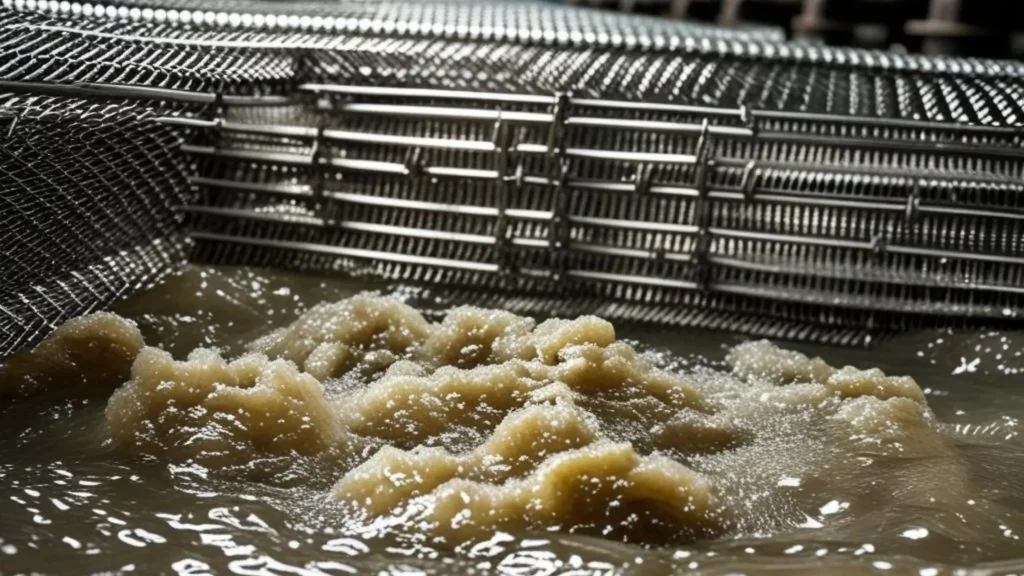
Screens for Bagasse Water Reuse are no longer optional in sugar production. Water is one of the most expensive and limited resources in a mill. For every tonne of cane crushed, a mill uses 1,500 to 2,000 liters of water. Most of this water does not disappear – it ends up as wastewater.

Walk through any sugar mill after crushing starts, and you will see the floors wet from washing and cooling pits overflowing near the bagasse section. That water is mixed with fibers, mud, and fine particles. Mills often let it flow to the drains. But that water has value. With the right screen, you can capture it, clean it, and use it again.

Government rules are also clear. MoEFCC and CPCB guidelines now push mills to reuse 80–90% of water internally. That means the days of letting water flow out unchecked are over. And this is where wedge wire technology comes in.

At Multitech Engineers, we have worked with sugar mills for years. We have seen how simple design choices like putting the right screen in the right place can be. That saves thousands of liters every day. This is not a theory. It’s what mills like yours are doing now to cut water costs and meet compliance.

What is Bagasse Water and Where Does It Come From?

Let’s understand Bagasse and the water around it.

Bagasse is the dry, fibrous residue left after crushing sugarcane. But it is never fully dry. It carries moisture, and during handling, some of that water flows out. Mills use water in different steps around bagasse:

  • Washing the bagasse storage floors
  • Cooling water in bagasse pits
  • Handling mud and juice spillages

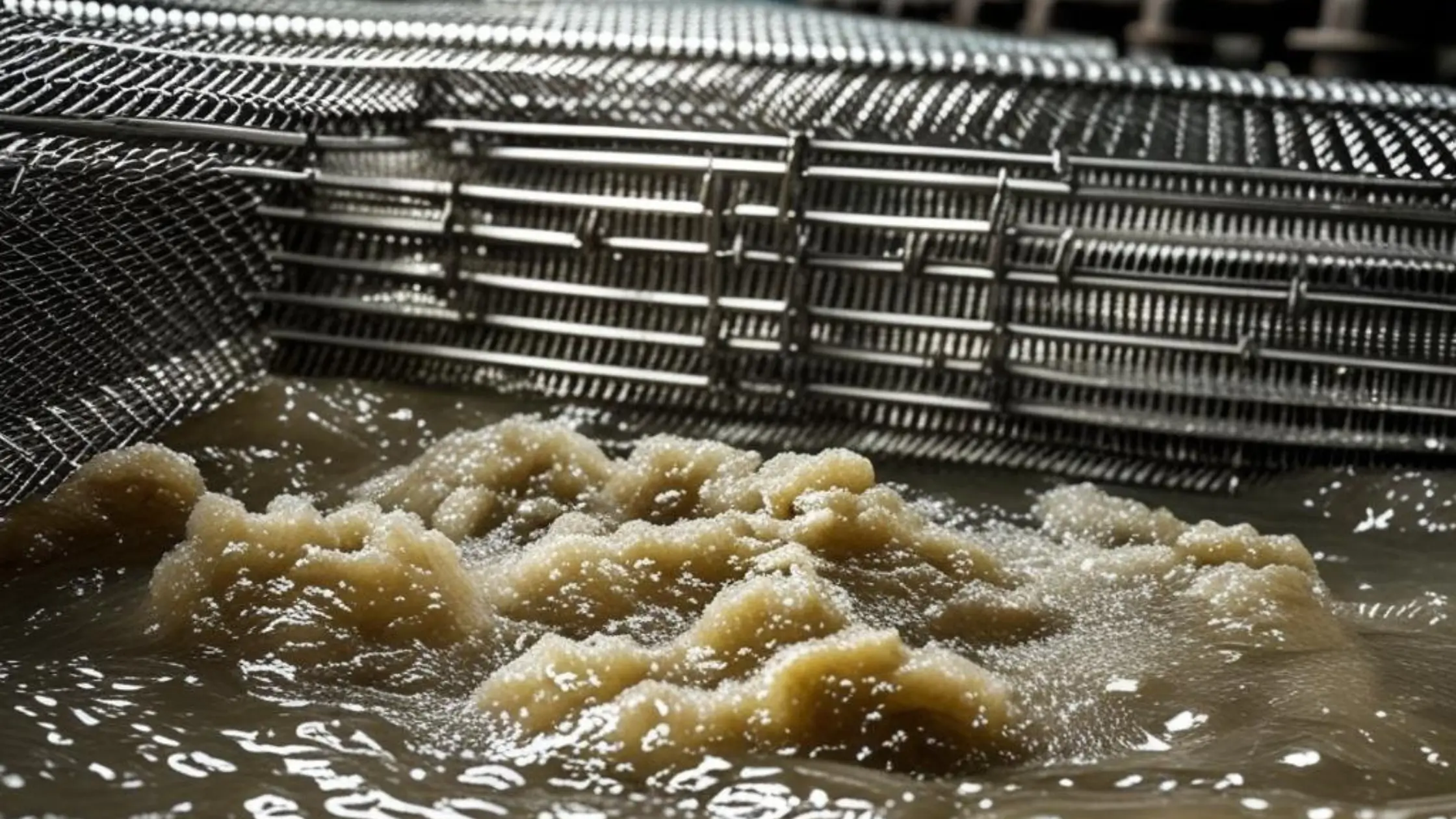
This water does not look clean. It carries tiny fibers, mud, and even sugar traces. But do not let that fool you. It is not a waste – it is reusable. The problem is, if you reuse it without filtering, the fibers clog pumps, block pipelines, and overload the Effluent Treatment Plant (ETP).

That is why mills install Screens for Bagasse Water Reuse at critical points. A good screen traps fibers but keeps water flowing freely. And that is what wedge wire screens do best.

Think of it like a simple kitchen sieve – but designed for industrial scale. Instead of straining tea leaves, you are straining fibers from thousands of liters of water every hour. The principle is the same, but the design is engineered for heavy-duty work in hot, wet, and corrosive environments.

Wedge Wire Screens for Bagasse Water Reuse

When you look at a sugar mill’s water system, floor wash pits and cooling drains are the big trouble spots. Water flows in fast, mixed with fibers, mud, and sometimes oil from machines. If you let that go straight to the pump or ETP, it is a nightmare. That blocked suction, choking pipelines, and rising maintenance costs.

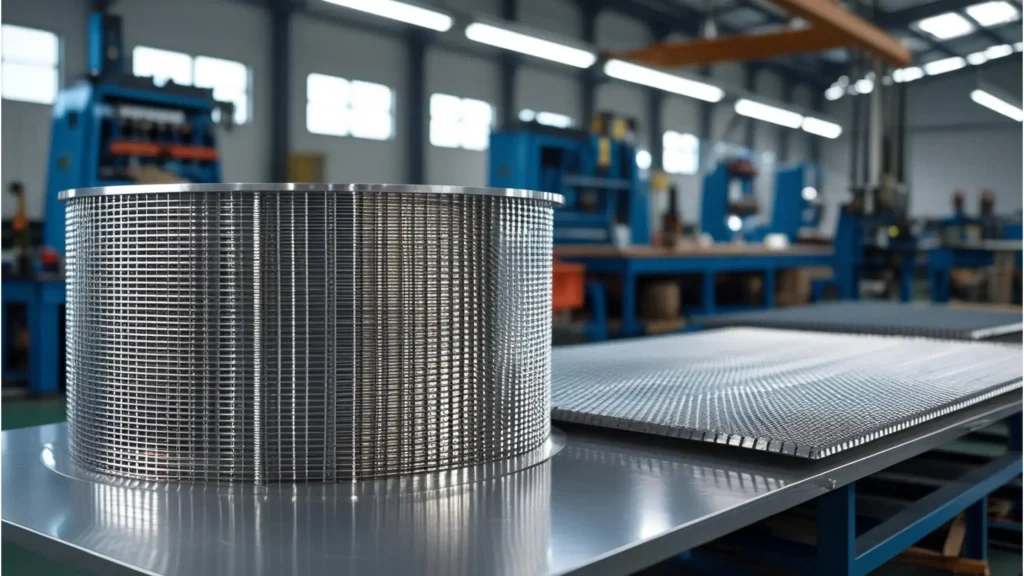
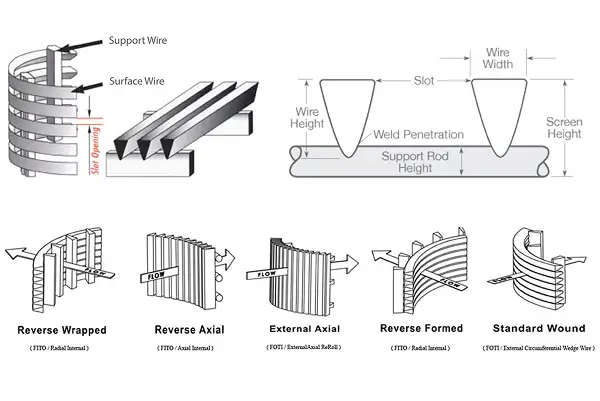
That is where wedge wire screens come in. They sit right in these pits and act like the first guard. The V-shaped wires allow water to pass easily while holding back fibers and solids. Unlike mesh or perforated plates, wedge wire does not clog as quickly because of its trapezoidal profile.

Here is what happens when you use them:

  • Pumps stop choking on fibers.
  • 70% of wash water gets recovered for reuse.
  • The load on the Effluent Treatment Plant drops.

You get cleaner pits and less downtime. And the best part? No complicated machinery. Just a well-designed screen doing its job every hour of the day.

Designing the Right Screen: What Sugar Mills Need to Know

Not all screens work the same. The difference between a good design and a bad one shows up in one crushing season. At Multitech Engineers, we design wedge wire screens for sugar mills based on flow conditions and pit layout.

Here are the critical specs you should check:

Feature Recommended Range Why It Matters
Slot Size 0.25–1 mm Stops fibers but keeps flow smooth
Material SS 304 or SS 316L Handles hot water and prevents corrosion
Wire Profile Trapezoidal Less clogging, easy cleaning
Support Rod Horizontal/Vertical Handles heavy water load

Shape matters too:

  • Flat panels work best in open channels or small drains.
  • Semi-cylindrical screens fit well in deep pits where water enters at high velocity.

Every mill layout is different, so custom fabrication is key. You do not just pick a screen from a catalog and hope it fits. That is why we build them to your flow conditions and space.

Water Savings Per Tonne: What is the Real Impact?

Numbers tell the story better than words. When mills start reusing bagasse water from floor wash and cooling pits, the savings add up fast:

  • 200–400 liters of water per tonne of cane can be reused.
  • A 5,000 TCD mill can save 1–2 million liters every day.

Think of that in real terms. That is the same as filling 400 tankers of water daily. For mills in regions where water costs are high or supply is tight, this is a big difference.

And it is not just about cost. Compliance is getting stricter. The 2024 MoEF guidelines want 80–90% reuse within the mill. If you start with simple steps like wedge wire screens, you are already ahead.

Big players are doing it:

Sugar Mill What They Did Impact Achieved
Balrampur Chini Installed wedge wire screens in wash pits 25% less freshwater used in daily operations
Dalmia Bharat Sugar Launched floor wash water reuse project 20% reduction in utility costs
EID Parry Used screens for condensate water reuse 30% lower load on the Effluent Treatment Plant (ETP)

These are not small wins. They show that designing for reuse works – not in theory, but on the ground.

Compliance and Sustainability: Why This Step Counts

Regulations are no longer a distant threat. The MoEFCC and CPCB have made it clear: sugar mills must aim for 80–90% water reuse inside the plant. The 2024 draft guidelines for Zero Liquid Discharge (ZLD) do not just apply to big mills; they will soon cover everyone.

And the truth is, you cannot hit those targets by relying only on Effluent Treatment Plants. Treatment is the last step. Filtration at the source – before the water becomes too dirty is cheaper and more effective.

Installing wedge wire screens in bagasse water pits is one of the easiest steps toward compliance. It cuts the load on your ETP, saves energy, and reduces freshwater dependency. That also adds value to your CSR and ESG scores. Customers, investors, and auditors all look for sustainability actions that are real and measurable. Screens give you that proof.

Multitech Engineers: Designing Solutions That Work in Sugar Mills

We have worked with sugar mills long enough to know that no two layouts are the same. That is why we do not sell off-the-shelf screens. We design them for your pits, your flow, and your operating conditions.

Our wedge wire products for sugar industries include:

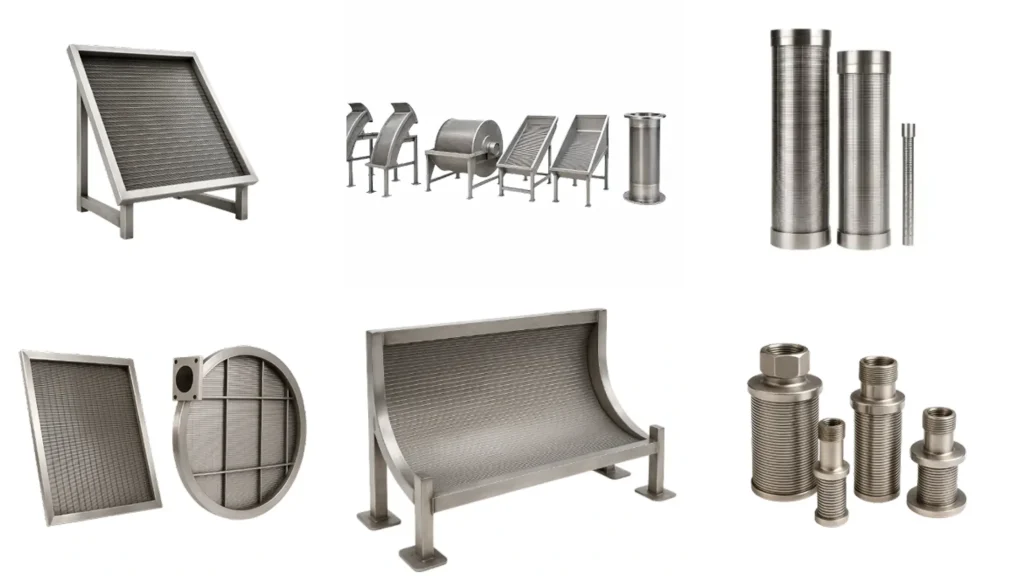
  • Flat wedge wire panels for drainage channels and floor wash areas.
  • Semi-cylindrical screens for bagasse cooling pits and high-flow zones.
  • Screen baskets and assemblies for handling heavy solid loads.

We build them from SS 304 or SS 316L for durability in hot, corrosive environments. Our screens are easy to clean, long-lasting, and custom-fabricated to your mill’s needs.

Working with Multitech means you get a partner who understands bagasse water challenges inside out. Not just a supplier sending standard parts.

Conclusion:

Every mill dreams of ZLD, but it does not start with big plants or costly systems. It starts with a simple screen sitting in a pit, stopping fibers from going where they do not belong. That is the first filter. And that is the smartest move you can make today.

Install Screens for Bagasse Water Reuse, and you are not just saving water – you are saving time, energy, and compliance headaches. It is like fixing a leak before the tank runs dry. Simple, effective, and proven.

At Multitech Engineers, we design screens that work like silent workers in your mill – doing their job 24/7, without drama, without breakdowns. If you are serious about sustainable sugar production, start with the screens. Because the cleaner the start, the easier the finish.
Product in Focus: Rotary Vacuum Drum Filter

Introduction:

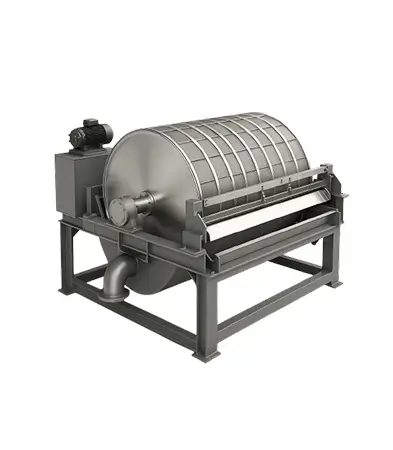
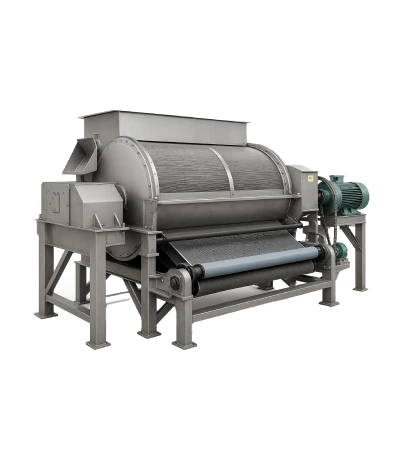
The Rotary Vacuum Drum Filter is one of the most trusted machines for solid–liquid separation in industries worldwide. You will find it quietly running in sugar plants, starch factories, mines, and effluent treatment plants – working around the clock to separate slurry into clear liquid and compact filter cake.

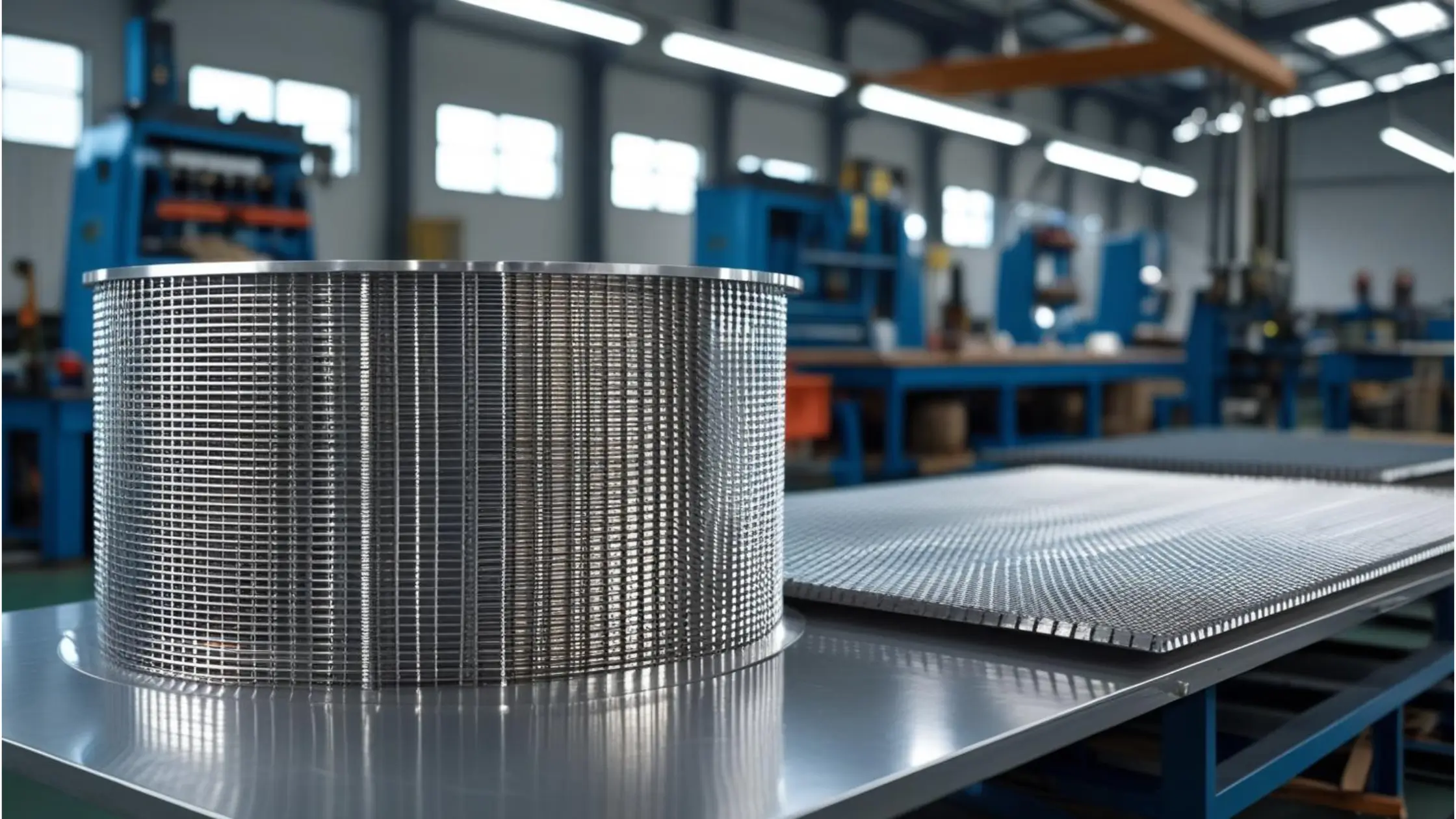
But the real work happens at the surface of the drum. This is where the slurry meets the filtration media. And in most high-performing systems, that media is wedge wire. A good wedge wire screen means better filtration precision, stronger cake formation, lower flow resistance, and fewer maintenance stops. A poor one does the opposite – it slows down flow, clogs often, and costs more to run.

Think of it like the air filter in a car. The engine can be in perfect shape, but if the filter is choked, everything runs harder, slower, and less efficiently. The same applies to an RVDF: the screen is the point where efficiency is either made or lost.

Anatomy of an RVDF and the Role of Wedge Wire

Here’s how a Rotary Vacuum Drum Filter works. The drum rotates partially submerged in slurry. Vacuum pressure inside the drum pulls liquid through the screen, leaving solids as a filter cake on the outside. As the drum turns, the cake is dried, discharged, and the screen is cleaned—ready for the next cycle.

Wedge wire serves as either the outer filtration surface or as a rigid support grid beneath a filter cloth. Its design offers:

  • High open area – allowing more liquid to pass through with less resistance.
  • Rigid structure – holding shape under vacuum and slurry pressure.
  • Excellent backflushing ability – clearing slots during cleaning cycles.

In industries like sugar processing (mud separation), starch plants (germ or cake separation), mining (ore concentrates), and ETPs (sludge dewatering), wedge wire’s consistent slot size and durability help maintain stable production rates. Without it, operators face more cleaning downtime, uneven cake thickness, and a shorter screen lifespan.

Why Wedge Wire Is Superior in RVDFs

The Rotary Vacuum Drum Filter works best when the screen can handle both the physical and chemical demands of the process. Wedge wire delivers that advantage because of its build and profile.

These features are not just technical specs – they directly affect production. In sugar plants, they mean clearer juice and faster mud separation. In starch plants, they mean cleaner germ separation. In mining, they help dewater concentrates without constant stoppages. And in ETPs, they keep sludge cycles running without excess cleaning time.

Design Options: Multitech’s Custom Capabilities

Every process is different, so the screen needs to fit more than just the drum – it must fit the slurry, pressure, and cleaning method. Multitech designs wedge wire solutions for RVDFs with:

  • Slot sizes from 0.05 mm to 3 mm – from fine filtration to coarse dewatering.
  • Full drum segments or modular panels – for easy retrofits and replacements.
  • Material grades – SS 304, SS 316L, and Duplex for corrosive or abrasive media.
  • Support rod spacing – adjusted for both pressure load and drum curvature.

This flexibility means screens can be tuned for high throughput, longer life, and reduced cleaning cycles. For operators, that translates into stable production and fewer emergency shutdowns.

Performance Metrics That Matter

When comparing wedge wire for a Rotary Vacuum Drum Filter, these numbers tell the real story:

  • Open Area % – A Higher open area means more liquid passes through with less resistance, increasing throughput.
  • Burst Pressure – Indicates how much vacuum or slurry load the screen can handle before deforming.
  • Weld Integrity – Critical for repeated CIP (Clean-in-Place) cycles without cracks.
  • Surface Finish – A smoother finish releases cake better and reduces hang-ups during discharge.

Ignoring these metrics can lead to slow filtration, uneven cake thickness, or premature screen failure. Tracking them ensures the drum runs consistently, with minimal unplanned downtime.

Common Issues with Substandard Screens

A Rotary Vacuum Drum Filter is only as reliable as its screen. Substandard wedge wire or poorly made panels create problems that operators notice quickly:

  • Cake does not release – leading to scraping, damage, and downtime.
  • Frequent clogging – raising cleaning costs and reducing production hours.
  • Lower weld life – meaning more frequent replacements and higher spare part costs.

Multitech prevents these issues by using precision welding and checking every slot for uniformity. Even a small variation in slot size can cause uneven cake formation or pressure loss. By eliminating these defects, the screen runs longer and performs more consistently.

Maintenance & Lifespan

Well-built wedge wire screens in an RVDF can last 6–10 years, depending on slurry type and cleaning frequency. Keeping them in top shape comes down to a few practices:

  • Periodic CIP or spray-cleaning – prevents buildup before it hardens.
  • Slot gauge inspection every 3 months – ensures flow is not restricted.
  • Inspect welds in high-pressure zones – catches stress cracks early.

Small checks prevent costly failures. A neglected screen can shorten drum life, while a maintained one will keep running smoothly for years.

Conclusion: Make Your Drum Filter Run Like New

The right screen turns a Rotary Vacuum Drum Filter from a maintenance headache into a reliable, high-throughput workhorse. Better flow, cleaner cake, longer life – that’s the result of getting the screen design right from the start.

Multitech does not just supply screens; we engineer them for your exact process. From sugar and starch to mining and effluent treatment, our wedge wire RVDF panels and drum retrofits are built to handle the pressure, the slurry, and the hours.

Contact us to get a custom solution that keeps your drum filter running like new.

Why Your Wedge Wire Screen Is Slowing Down Production – And How to Fix It

Introduction

Why Your Wedge Wire Screen Is Slowing Down Production is not just a question. It is a warning sign we see too often in the field.

Production rarely stops all at once. It slows. Quietly. One shift takes longer. One tank doesn’t clear fast enough. And suddenly, you are not hitting your numbers.

We have seen this in sugar mills running cane at full capacity. In starch plants dealing with thick slurry. In wastewater treatment units, processing peak loads. The machines seem fine. Pumps are running. Flow meters show movement. But something’s off.

In many cases, it is the screen.
It is not torn or broken. It is just working less than it should. Slot by slot, it clogs. Slowly, it chokes the system.

This blog is written for people who run those systems. For engineers, plant managers, and operators across sugar, starch, oil, wastewater, pulp, and chemical industries. If you are seeing slowdowns and do not know why, read on. We have seen it. Fixed it. And we will explain how.

wedge wire screen is slowing down production

Why Your Wedge Wire Screen Is Slowing Down Production

I remember a starch plant in central India. Their germ separation line was not keeping up. They replaced the valves. Cleaned the tanks. Checked the pump. Still slow.

It turned out to be a second grind screen that had run two weeks too long. The slot openings were partially blocked. The flow rate was down 20%. Once they swapped it with a fresh, correctly slotted unit, things snapped back to normal.

This happens more than you’d think.
Screens get ignored. They are hidden, quiet, and not usually blamed. But they can throttle your system just enough to hurt output – without setting off alarms.

In sugar factories, fiber wash screens often clog when the cane is muddy or overripe.

In wastewater plants, rotary drum screens slow down under higher solids load if the slot size isn’t matched right.

In paint or chemical processing, bead mill screens lose efficiency when cleaning cycles are skipped.

If your flow rate is down, or you are cleaning screens too often, or you are adjusting pressure just to maintain throughput, look at your screen. It might not be broken. Just wrong for the job.

7 Reasons Why Your Wedge Wire Screen Is Slowing Down Production

You won’t always spot the issue by looking at the screen.
But if your production has dropped and your system is working harder to push the same load, one of these reasons might be behind it.

1. Wrong Screen Design for the Application

We have seen this mistake cost sugar factories entire production days. They were using flat panel screens in a high-velocity discharge line where the slurry needed to be guided and separated quickly. The result? Overflow, blockages, and slower output.

In cases like that, a sieve bend would have done a better job. Sieve bends use gravity and flow momentum to separate solids more efficiently. They are ideal for high-flow, medium-solids processes. Flat panels have their place, but not everywhere.

2. Clogging or Blinding Due to Material Buildup

Starch particles. Sludge. Fibrous pulp. These can fill screen slots like cement if you are not careful. It does not happen all at once. First, the flow slows down. Then the pressure builds. Then the system stalls.

This happens a lot in wastewater and starch recovery plants. Especially when the screens are not inclined or self-cleaning.

You do not always need to replace the screen – sometimes, you just need the right screen orientation or cleaning setup.

Multitech Solutions:

3. Poor Slot Size or Profile Wire Selection

Slot size matters. We once reviewed a starch unit that was using 0.5 mm slots to recover fine starch slurry. It looked okay on paper. But the starch was passing right through. Recovery dropped. They lost product – and time.

Once we switched them to 0.2 mm bead mill screens, starch yield improved, and the downstream filter load dropped. You do not need tighter slots everywhere – but you need them in the right places.

4. Lack of Proper Maintenance or Cleaning Systems

Even the best screen fails if it’s not cleaned. In the paint and chemical industry, residue builds up fast. We have seen scaling in water treatment units and hardened deposits in pigment lines.

Screens do not always need replacement – they need help staying clean. That is where compactors and step screens make a difference. They automate cleaning and reduce manual shutdowns.

Multitech Add-ons:

5. Operating Under the Wrong Pressure or Flow

Screens are not universal. A screen that works at 2 bars might collapse or clog at 4 bars. Same for flow rates. We have seen systems overpressurize because the screen setup did not match the pump curve or process demand.

Using a pressure box or a properly designed header and lateral system helps control these flow characteristics and protect the screen from overwork.

Multitech Solutions:

6. Using Generic Instead of Industry-Specific Screens

One-size-fits-all is great for caps, not for industrial screening.

A second grind screen made for corn wet milling won’t work in a chemical slurry. A rotary vacuum drum filter used for pigments needs a different slot profile than one filtering sugar syrup. A germ screen must be tailored for the mix and flow conditions of that starch plant.

If you are using generic screens, you are losing performance – period.

Multitech Products Built for Specific Uses:

7. Old or Damaged Screens Still in Use

Screens wear out quietly. They do not usually snap. They wear down. Slots widen. Edges dull. The flow gets uneven. But operators do not always notice – until output dips.

We have seen pulp plants lose 10–15% efficiency just because their centrifuge baskets had not been replaced in years.

Running worn-out screens might seem cost-effective. But the downstream impact is bigger: more energy, more downtime, more rejects.

Time to Upgrade:

How Multitech Engineers Help You Fix It

Multitech Engineers build wedge wire screening systems for people who need things to work consistently. We do not just sell screens. We design them around the job they need to do.

Whether you are separating cane fiber in a sugar mill or dealing with sludge in a wastewater tank, your screen needs to fit the material, the flow, and the pressure. That is where Multitech comes in.

We’ve worked across industries such as sugar, starch, chemical, pulp, oil & mineral processing, and water treatment. And we understand that what works for one process won’t work for another. That is why our approach is always custom.

What we offer:

  • Precise slot sizing – matched to your solids, slurry, or separation needs
  • Industry-specific screens – not one-size-fits-all designs
  • Wear-resistant materials – because industrial systems do not run 9 to 5
  • Retrofit and upgrade support – to improve existing systems without full replacement
  • Consultation + after-sales service – when you are stuck, we pick up the phone

From design to installation, we make sure your screen does its job – so you can focus on yours.
Explore our products

Also read, Beyond Strength: How Our Wedge Wire Screen Handles Extreme Conditions.

When to Replace Your Wedge Wire Screen (Checklist)

Not sure if your screen is the issue? Here’s what to look for.

If you are seeing any of this:

  • Reduced throughput without a clear cause
  • Frequent manual cleaning or rinsing
  • Material bypass – solids in the filtrate
  • Unexplained pressure drops across filters

…it’s time to check your screen setup.

It might be clogged.
It might be oversized.
Or it might just be wrong for your process.

Replacing it with the right screen can bring your system back to full efficiency – without touching the rest of your setup.

Conclusion:

When your Wedge Wire Screen Is Slowing Down Production, it is not just a small problem – it affects everything. Throughput drops. Cleaning time increases. Pressure builds up. And in many plants, no one suspects the screen until it is too late.

We have seen factories lose time, product, and profit over a few millimeters of slot size – or a screen that stayed in too long.

If your production is lagging and the cause is not clear, start simple. Re-evaluate your screen.

It could be the fix you have been missing.
Need help figuring it out?
Talk to Multitech Engineers.

We will look at your process, your materials, and your current setup – and help you find a better fit.

Beyond Strength: How Our Wedge Wire Screen Handles Extreme Conditions

Introduction: What “Extreme Conditions” Really Mean in Industry

A wedge wire screen is not just a filter. In many industrial plants, it’s the barrier between order and chaos.

Imagine this. A sugar mill runs 24/7 during peak season. The slurry is hot, full of fine particles, and never stops flowing. If the screen clogs or breaks, the entire line stalls. That is not just a delay, but also wasted manpower, lost revenue, and pressure from every direction.

We have seen this across industries.
In a wastewater plant, acidic fluids chew through ordinary screens.
In a mineral processing unit, high-pressure flow wears down edges in weeks.
In starch plants, fibrous media causes blockages that no one sees until it is too late.

Extreme conditions vary. But they all test the same thing: whether your equipment holds up. Over the years, we have worked closely with maintenance teams and procurement heads across sugar, starch, oil & gas, pulp, paint, and chemical industries. What they need is not just a product – they need peace of mind.

And that is where a wedge wire screen built for real-world abuse makes the difference.

What “Extreme Conditions” Actually Mean

Here’s how demanding environments test every aspect of screen design:

Condition Type Industrial Examples Relevant Industries
High Pressure Inlet manifolds, pipe screens Pulp & Paper, Mining
High Temperature Juice heating tanks, steam headers Sugar, Chemicals
Corrosive Media Saline/brine water, acidic effluents ETPs, Minerals, Chemical Plants
High Abrasion Bagasse, fibrous/sticky solids Sugar, Starch, Wastewater
Long Duty Cycles Continuous flow > 6,000 hrs/year Water Utilities, Large Mills

Extreme conditions are not just about physical stress. They include thermal fatigue, chemical attack, pressure surges, and abrasive wear.

What Makes Wedge Wire Screens the First Line of Defense

Think of a wedge wire screen like the sieve in your kitchen – but engineered for a battlefield.

Its profile wire is not round. It is V-shaped. That shape controls what gets through. It also resists clogging – particles do not get stuck as easily because they pass through a tapered slot.

The structure is welded. Strong. Compact. Built to take pressure and punishment over the years.

You do not need to open it up every month and clean it with acid. Most times, a rinse is enough.

And in industries like chemical processing or wastewater treatment, less downtime means less chaos.

So while pumps, motors, and tanks often get attention, the screen is the quiet worker. It protects systems from overload. It shields gear from damage. It saves your team from repeated cleanup.

We call it the first line of defense. And in extreme conditions, it might be the only one that matters.

Engineering Features That Withstand It All

Every PSPM wedge wire screen is designed to handle stress at every point:

  • Profile Wire Optimization: V-shaped, hardened profiles reduce clogging and resist deformation.
  • TIG Welded Integrity: Every joint is precision-welded and pressure-tested for long-term strength.
  • Support Rod Architecture: Vertical/horizontal configuration distributes load to avoid collapse.
  • Material Grades: SS304, SS316L, Duplex, and custom alloys selected based on media chemistry.

This isn’t standard off-the-shelf manufacturing – it’s application-specific engineering.

Performance Validation Metrics

We back every design with rigorous testing and application validation:

Test / Metric What It Proves Use-Case Fit
Burst Pressure Test Weld strength & body integrity STPs, Inlet Manifolds
Slot Deviation Under Load Maintains filtration cutoff Pulp, Starch Filtration
Corrosion Resistance Dip Endurance in acidic/saline environments Chemical & Mineral Processing
Thermal Fatigue Test Handles expansion/contraction cycles Sugar, Paper, Reactors

Screens are often forgotten – until they fail. That’s why our validation tests simulate the worst, not the best, conditions.

High-Pressure and Abrasive Media: No Room for Weak Links

In some plants, the enemy is not just corrosion – it is impact.

We have seen screens take a beating in places like grinding mills, coal washeries, and starch slurry systems. It is not just about flow rate. It is about velocity, pressure, and the type of material that passes through.

You can use the best pump or motor, but if the screen at the end wears out in 2 weeks, that whole setup breaks down.

That is why screen strength matters.

Take these examples:

Coal Slurry Washery:

The slurry is dense, and the particles are sharp. Standard screens bend or warp. We use wedge wire screens with reinforced frames and tight slot tolerances. These hold up even when the flow pressure spikes.

Bead Mill Screens:

In paint and chemical processing, the grinding beads wear down everything they touch. These screens are precision-machined to avoid micro-cracks and are hardened to last through constant friction.

Centrifuge Baskets:

These rotate at high speeds. We build them with load-balanced construction, so the screen does not deform. It stays true under centrifugal force.

Hammer Mill Crusher:

Here, the screen faces both impact and heat. It can’t be brittle. Ours are cut, welded, and ground to absorb shocks and still maintain structural shape.

Second Grind Screen and Third Grind Screen:

These go in wet milling systems where the fiber and starch grind against the screen for hours. We use high-wear alloys and test them under running slurry to check slot performance over time.

These environments do not offer second chances. That is why your wedge wire screen can not just “fit” – it has to endure.

Thermal Expansion and High Flow: Holding Shape Under Stress

Heat changes everything.

Pipes expand. Metals flex. Flow rates surge.

In industries like sugar, pulp & paper, and starch processing, screens face rapid temperature shifts. Especially during startup and shutdown cycles. If the screen warps, even a little, the slot gap changes. That causes leaks, blockages, or worse shutdowns.

We have built wedge wire screens that hold their shape under thermal stress. Not just in lab tests, but in live mills and plants.

Examples from the field:

Rotary Vacuum Drum Filter:

Used in sugar processing, where hot slurry is filtered continuously. The screen needs tight slot control despite expansion and contraction.

Steep Tanks / Vat Screens:

During starch extraction, water temperatures can rise sharply. Screens here are welded with a high-tensile spine that resists bending.

Rotary Trommel for Pulp & Paper:

These rotate nonstop, with a mix of water, fiber, and chemical pulp. They take both thermal and mechanical loads. Our wedge wire panels are bolted with flex couplings to adjust to minor shifts – without breaking.

Cane Juice Clarifier:

Sugar juice gets heated and cooled rapidly. The screens used here are reinforced with collars to avoid stress failure at the ends.

Thermal expansion is quiet. You don’t hear it like a motor failure. But when the screen loses form, your entire process falls out of spec. That’s why thermal resistance is built into every joint and weld we make.

Engineering Every Part for Harsh Conditions

It’s not just the screens alone. Every part around them matters too.

When we design a system, we look at the entire flow path, not just the screen surface. The supports, the channels, and the filter housing all take on stress.

Here’s how we build around that:

Separation + Classification

Flow Distribution + Filtration Systems

  • Header and Lateral Systems: These manage flow across multiple vessels. We design them with pressure-balancing tubes so no screen gets overloaded.
  • Resin Traps: Installed before pumps or sensitive valves. The structure absorbs surges and catches floating media, preventing damage downstream.
  • Pre and Post Grind Filtration Screens: In corn or starch units, they control flow before it hits the mill. These screens reduce the risk of overloading and help balance feed.
  • Vessel Internals: Custom fit to each tank. We use modular assembly so you can replace a section, not the whole unit.

In each of these, Multitech Engineers build with the assumption that it will face stress pressure, heat, or flow imbalance. That is the only way a wedge wire screen system can survive.

How Multitech Builds for Durability

In industrial environments, failure is never just about a broken part – it’s downtime, wasted batches, and a maintenance team on overtime.

That’s why we don’t take shortcuts.

At Multitech, every wedge wire screen is built to survive real plant conditions, not just pass factory QC.

Hydrostatic Testing – Every Batch

Before anything leaves our workshop, it’s pressure-tested with water. This helps us catch weak welds, leaks, or joint failures. Long before you ever see them.

Microscopic Weld Inspection

Most weld failures start small – invisible cracks, bad fusion, or thermal fatigue. We use magnification checks on critical joints to find these faults early. No assumptions. No weak spots.

Real-World Simulation

We don’t just test with clean water or ambient air. We simulate high-pressure fluid, thermal expansion, and chemical exposure. Because that is what our screens face in real plants.

Material Pairing Based on Chemistry

If you are pumping saline effluent or handling acidic pulp, we do not just say “use stainless steel.” We match materials like Duplex profiles with compatible support rods to avoid galvanic corrosion or premature fatigue.

Every design is reviewed like someone’s job depends on it – because it usually does.

Real-World Endurance: Proof on the Ground

We do not believe in hypothetical durability. We believe in real machines in real plants.

Here is what our screens have already handled – out in the field:

Chennai STP (Sewage Treatment Plant)

Installed in a brine-affected inlet zone. Most screens rust out in 6 months. Ours ran 14 months without a single corrosion mark. Operators only opened it for scheduled cleaning.

UP Sugar Mill

Harsh bagasse slurry, fibrous solids, backwashing twice a day. Our screens ran 9 months with zero slot widening – still holding 0.5 mm accuracy. No downtime.

Chhattisgarh Pulp Processing Unit

Extreme pressure fluctuations. Backflushing cycles every 3 hours. No weld cracks, no screen failure, and performance held steady beyond design expectations.

These are not controlled lab trials – they are dusty shop floors, aggressive fluids, and operators who do not slow down. And yet, our screens hold.

Conclusion:

A wedge wire screen does not shout for attention. It does not spin like a motor or flash like a control panel. But when conditions get extreme, the screen either holds up or breaks down.

We have built screens that stay in place for years without failing. Not because we over-engineered them. But because we listened. We have walked through sugar plants during peak crush. We have seen what raw effluent does to an unprotected system. We have watched high-speed mills chew through weaker filters in weeks.

And every time, we designed better.

So when we say our wedge wire screen is built for extreme conditions, we do not mean it as a tagline. We mean we have tested it, fixed it, and tested it again. Until it did not break.

If you are dealing with aggressive flows, high temperature, abrasive solids, or unpredictable cycles, your screen should be the one part that you do not have to worry about.

Want to Discuss Your Application?

If you are working in sugar, starch, water, or wastewater treatment, mining, pulp, chemical, or paint. And you are tired of screen failures – let’s talk.

We can help you choose the right wedge wire screen, the right slot size, the right material grade, and the right build.

📩 Contact us to discuss your toughest conditions.
Or check our full product catalog to explore all system-ready screen solutions.

Sustainable Filtration: How Wedge Wire Screens Support Circular Water Use & Zero Discharge Goals

How Wedge Wire Screens Support Circular Water Use is not just a technical topic. It is part of a bigger shift happening in factories, plants, and treatment systems across India.

Every month, we talk to engineers and EHS managers who say the same thing:

“We’re under pressure to reuse more water.”
“ZLD is now non-negotiable.”
“Our ESG audits are getting tighter.”

This isn’t just about compliance. It’s about survival.

Water is becoming expensive to use and harder to discharge.

And in that bigger system, small things matter.

Wedge wire screens are often overlooked. Because it plays quietly but plays a key role. They help save water, reduce waste, and protect the rest of your system.

This blog breaks it down.
No fluff. No tech jargon overload.

Just a plain explanation of where wedge wire screens fit, what they do, and how they help you move closer to zero discharge.

What Circular Water Use Means in Practice

What is Circular Water Use?

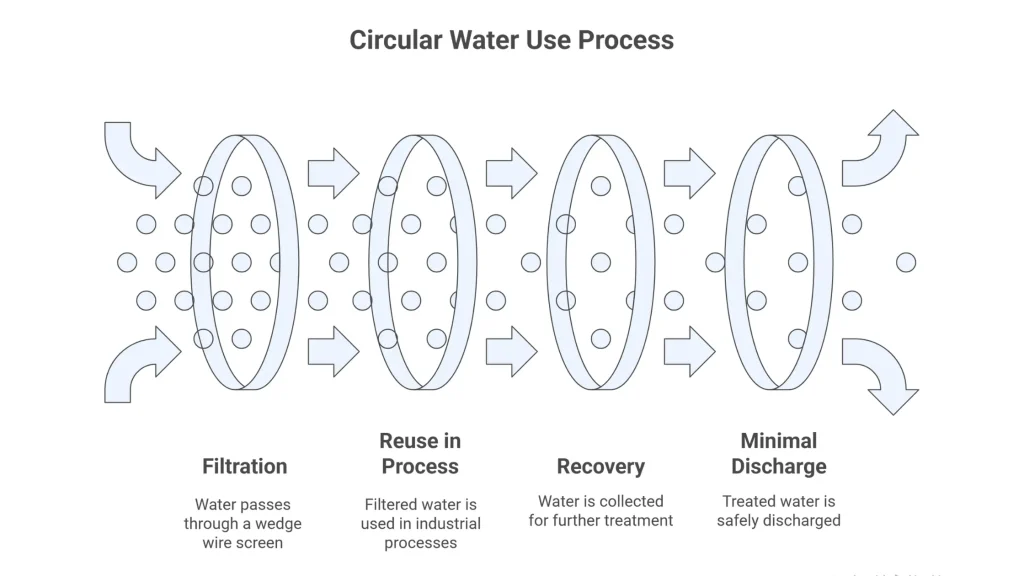
Circular water use is simple in theory: use water, treat it, reuse it again and again.
But in practice, it’s complicated.

how wedge wire screens support circular water use & zero discharge goals

You are dealing with dirty process water.
You have got oil, solids, fiber, starch, ash, grit. All depending on your industry.
You are trying to recover it, filter it, and reuse it without clogging the whole system.

Why Zero Liquid Discharge (ZLD)?

In many Indian states, especially in industries like textiles, pharma, sugar, or power, ZLD is now required.
It means you can not discharge anything. Not even treated water.
You need to recover, reuse, or evaporate every drop.

And this is where filtration becomes critical.
The better you remove solids early, the easier it is for RO, MEE, and evaporators to do their job.
Bad pre-filtration = more fouling, higher costs, shorter equipment life.

So while membranes and sand filters take care of the heavy stuff later, wedge wire screens quietly manage the flow from the very beginning.

How Wedge Wire Screens Support Circular Water Use

Wedge wire screens act like gatekeepers. They don’t just filter, they shape the entire water recovery process.

Efficient Solid-Liquid Separation

Think of a wedge wire screen like a sieve, but built for industrial punishment.

Slotted, stainless, and laser-welded – these screens can handle tough slurry, fibrous pulp, oily water, and fine particles without clogging.

In circular water systems, they are often the first line of defense.

When used ahead of sand filters, membranes, or evaporators, they reduce the solid load significantly.

This protects the rest of your system and saves energy.

how wedge wire screens support circular water use & zero discharge goals

Less Backwash, More Recovery

Traditional sand filters need frequent backwashing. That wastes water.
Wedge wire screens? Not so much. Their smooth surface and slotted design resist clogging.

That means less cleaning and fewer shutdowns.
One plant we worked with in the starch industry reduced their filter backwash water by 30% – just by switching to a properly sized static inclined hill screen.

They did not touch the rest of the system. Just changed the screen.
Simple upgrade. Big impact.

Longer Media Life

When you use wedge wire screens before media filters, you extend the life of the filter beds.

Fewer fines make it through. The pressure differential stays stable.
That’s less maintenance, fewer replacements, and better uptime.

Used Wedge Wire Screen, Such as.

Wedge Wire Screens vs. Membranes and Sand Filters in ZLD Systems

In a ZLD system, everything works together. But not everything works equally.

Some components clog.
Some need chemicals.
Some are just expensive to maintain.

And then there are wedge wire screens. They work quietly but consistently.
Let’s look at how they stack up against membranes and sand filters.

Feature Sand Filters Membranes (UF/RO) Wedge Wire Screens
Clogging Risk High Medium Low
Cleaning Needs Frequent backwash CIP with chemicals Rare, easy rinse
Lifespan 1–2 years 2–4 years 5–10+ years
Power Use Moderate High None (gravity flow)
Role in ZLD Secondary polishing Final filtration Pre-filtration / primary separation

The real value of wedge wire screens shows up before trouble begins.

In a textile plant in Tamil Nadu, for example, membrane fouling was a daily issue. The team was using sand filters before their RO, but solids still got through.

We suggested installing a rotary drum screen ahead of the filter. Just that change cut membrane cleaning frequency by half in three weeks.

CPCB Direction and What Industries Are Doing Now

Regulations aren’t getting easier.
The CPCB has made it clear:
Industries must reduce water draw from natural sources and maximize reuse.

Many sectors are now expected to show zero discharge or near-zero discharge performance, especially if they operate in water-stressed zones.

Sugar mills, distilleries, and food processors are adding pre-filtration stages to cut down on effluent volume.

Wedge wire screens are becoming a default choice—not because they’re “new” but because they just work.

In some recent state pollution board audits, we have seen wedge wire-based filtration systems listed as part of best-practice setups. Especially in the first stages of ETPs and WTPs.

Related Products Used in These Plants:

📌 External reference:
See the National Water Mission guidelines for details on industrial water reuse, ZLD compliance, and water audit benchmarks set by the Indian government.

About Multitech Engineers

At Multitech Engineers, we have spent decades working with industries that cannot afford filtration failures. Our wedge wire screens, rotary drum screens, resin traps, and custom filtration components are built to support tough ZLD and water reuse demands. Without overcomplicating the process.

Whether you are upgrading a sugar mill’s primary filtration, setting up an ETP for a food plant, or redesigning pre-filtration before RO, we have seen what works. And more importantly, what lasts.

We don’t sell hype. We build solutions that work quietly in the background.
📌 Explore our full product range here.

Final Thought

Wedge wire screens are not showy. They won’t win awards.
But in circular water use systems, they pull more weight than they get credit for.

They:

  • Stop solids at the source
  • Reduce backwash and media replacement
  • Protect costly downstream systems
  • Work for years with minimal maintenance

That is why they belong in every serious ZLD plan.

How Wedge Wire Screens Support Circular Water Use is not just a technical detail.

It is a smart, low-risk move for any plant trying to stretch water, reduce discharge, and meet sustainability goals without spending a fortune.

If your filtration system keeps needing fixes, start at the start.
Check your screens.

✅ Ready to make your water system more efficient?

If you are working on ZLD goals or looking to reduce water loss in your filtration setup, wedge wire screens can help.

Get in touch with Multitech Engineers to discuss what fits your system best – no fluff, just practical solutions.

📩 Contact Us

Modern Manufacturing of Wedge Wire Screens: Automation, Tolerances & Turnaround Time

Modern manufacturing of wedge wire screens has changed how industries work with filtration and separation. We have moved from slow, inconsistent methods to precision-built screens made with speed and accuracy. For those who rely on these components – whether in water treatment, food processing, or chemical plants – this shift matters. Small changes in slot size or weld quality can affect your entire operation.

At Multitech Engineer, we have seen this change up close. We have built screens for companies that needed tight tolerances, fast delivery, and zero defects. And we have learned that when you automate right, you do not just make more – you make better.

This article explains how modern manufacturing works in our world. Not theory. Just the process, the impact, and why it helps you.

What Is Modern Manufacturing of Wedge Wire Screens?

Understanding the Process: Modern Manufacturing of Wedge Wire Screens

Think of wedge wire screens as the backbone of a filter. The way they are made decides how well they perform. In the past, it was mostly manual. Hand welding. Guesswork slotting. And often, inconsistent results.

Now things are different.

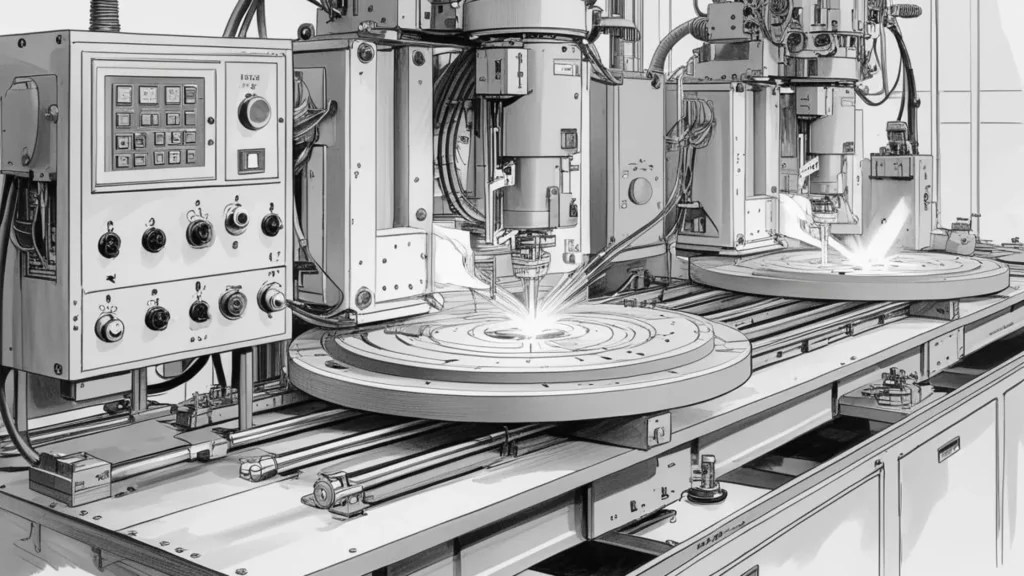
Modern manufacturing of wedge wire screens means using machines that can weld, align, and check with high accuracy. We use CNC-based systems to cut and slot wires. Automated TIG welding joins V-shaped wires to support rods, maintaining exact spacing throughout. Every screen is tracked. Every part is measured. We don’t just build parts – we follow a process built for precision.

Here is the simple difference: the old way depended on the skill of the worker. The modern way depends on systems designed for consistency. That’s how we meet slot sizes like 0.05 mm without variation.

It’s not about being fancy. It’s about being reliable.

When a pharmaceutical company asks us for screens with 0.1 mm tolerance and zero burrs, they know we can do it – not once, but every time. Because our process is set up that way.

How We Build It: Key Stages in Modern Manufacturing of Wedge Wire Screens

A. Automated Welding Systems

Welding is the heart of the screen.

In modern manufacturing of wedge wire screens, we do not rely on hand welding anymore. We use automated TIG welding systems. These machines weld V-shaped wires to support rods with tight control over heat, angle, and spacing.

This matters more than it sounds. When welds are not uniform, slot gaps shift. And when slot gaps shift, filtration becomes unpredictable. That is a big risk in critical industries like sugar, chemical, or wastewater treatment.

With automation, we maintain perfect wire positioning and fusion. No guesswork. No burnt edges. Just consistent welds.

We have seen clients switch from manually welded screens to ours and cut their maintenance calls in half. Less clogging. Better flow. More uptime.

And if a project demands different wire profiles or rod patterns, we reprogram the machine. No downtime. No trial-and-error. That’s what this stage is built for: control and repeatability.

Modern Manufacturing of Wedge Wire Screens

B. Slotting & Wire Alignment

This is where tolerances come into play.

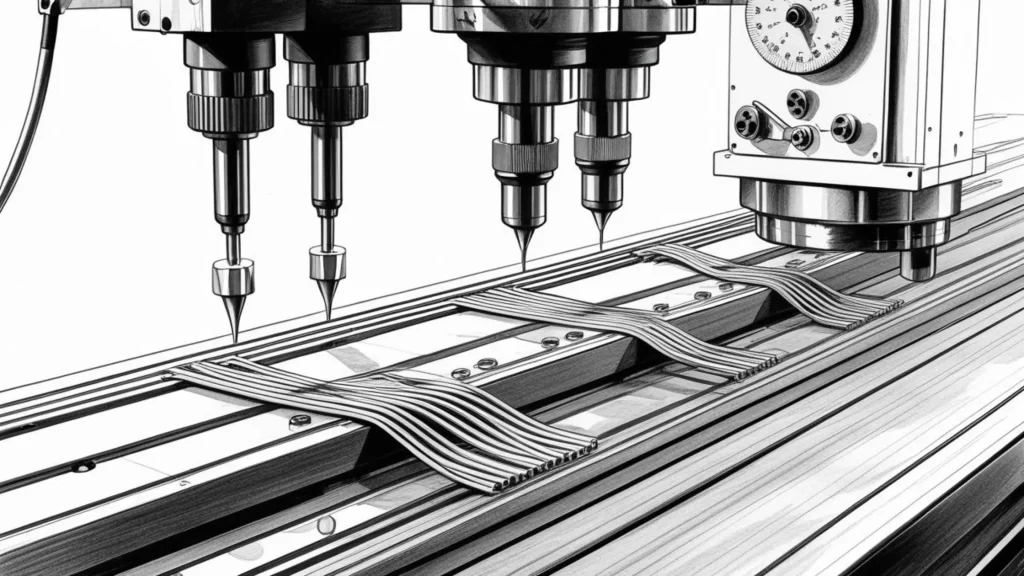
In our plant, we do not “cut and hope.” Slot sizes are programmed into CNC-controlled systems. These machines cut slots to exactly what is needed. Whether that’s 0.05 mm for fine filtration or 3 mm for coarse flow.

Alignment matters too. Each wire has to sit exactly in line. Even a 0.1 mm shift can throw off performance.

We use digital micrometers, laser position sensors, and slot check gauges. And every screen is inspected before it moves to the next step.

If a client needs screens for resin traps or pressure vessels, we often include slot mapping reports. This way, they know exactly what they are getting. And they know it is within spec.

Modern Manufacturing of Wedge Wire Screens

C. Framing and End-Fitting

Once the screen surface is welded and aligned, we frame it.

We do this in-house using automated ring rolling and forming machines. Whether it’s a centrifuge baskets, flat panel, or corn screen, we shape and weld it using jigs and rotary systems. That keeps form accuracy tight. Especially for curved applications.

End-fittings are then welded. These can be flanges, threads, caps, or couplings. Many customers send us their assembly specs, and we match them directly. No back-and-forth. No compatibility issues on-site.

Some clients only realize how precise this stage is when they try to replace a damaged screen from another vendor, and it doesn’t fit. That doesn’t happen with ours.

Because modern manufacturing of wedge wire screens is not just about producing. It’s about producing to spec, every time.

Modern Manufacturing of Wedge Wire Screens

Why It Matters: Benefits of Modern Manufacturing of Wedge Wire Screens

When we talk about modern manufacturing of wedge wire screens, we are not just talking about using machines. We are talking about the real-world benefits that come from building screens. With better control, faster systems, and fewer errors. Here’s what that means for you.

A. Tighter Slot Tolerances

Slot size affects performance. A 0.2 mm spec that turns into 0.4 mm can lead to leakage or contamination.

We keep tolerances within ±0.02 mm using automated controls. Every screen is verified, and records are saved. You get what you ordered.

B. Faster Turnaround Time

All manufacturing happens in-house – no outsourcing. That is how we deliver standard screens in 5–7 days.

A mining client once received their order in 4 days, helping them avoid a shutdown. Fast delivery isn’t a promise. It’s normal.

C. Fewer Defects, Less Rework

Weld issues, misaligned wires, and poor frames lead to failures. We’ve reduced defect rates to under 1%.

Some clients have replaced 3-month screens from others with our 12-month performers—same job, better build.

That’s the difference modern manufacturing makes.

Inside Multitech’s In-House Manufacturing Ecosystem

At Multitech Engineer, we don’t outsource the hard parts. We do everything in-house – slotting, welding, rolling, framing, and testing. That’s how we keep control over quality, cost, and delivery.

This is not just about convenience. It is about responsibility. If something goes wrong, we do not blame a supplier. We fix it. But most times, we do not have to – because we built the system to prevent it.

Our Full Process Under One Roof

When a job starts, it moves through clearly defined stages.

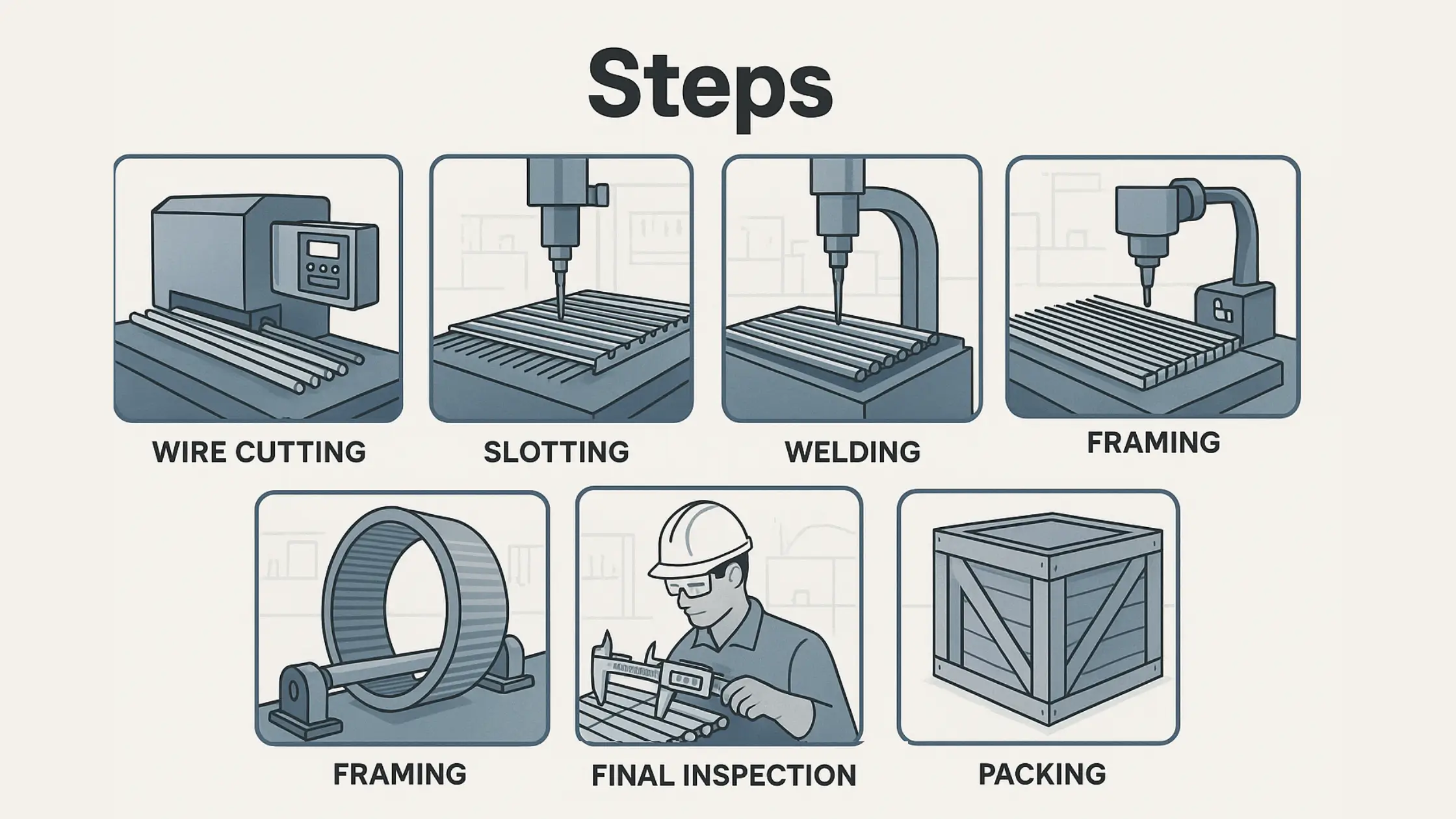
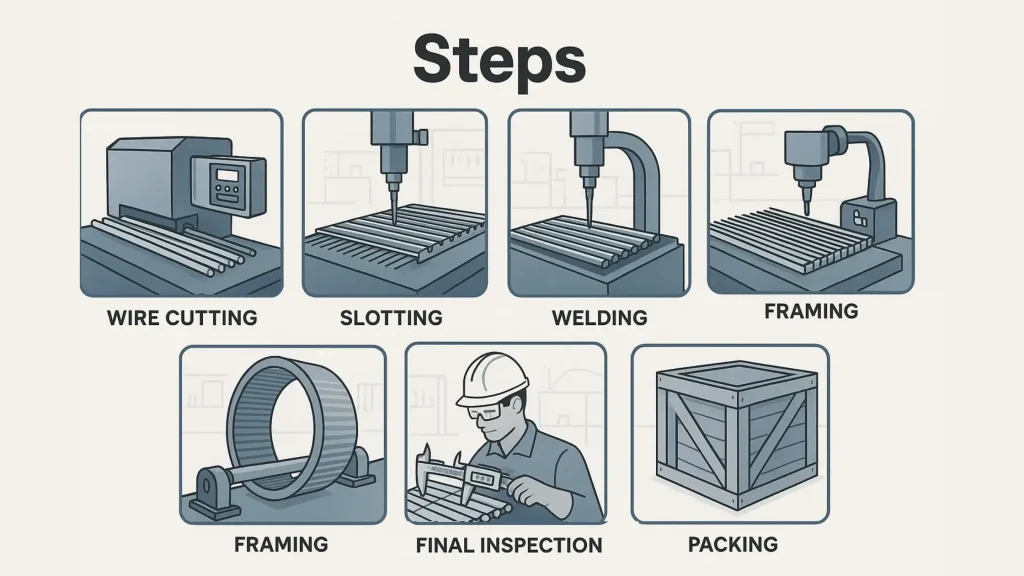
  1. Wire Preparation – We cut wedge wires and support rods to the required lengths using programmable cutting machines.
  2. Slotting – V-wires are slotted using CNC machines that set the spacing automatically. These are checked with micrometers and slot gauges.
  3. Welding – TIG welding is done on rotating jigs, controlled by PLCs. This keeps heat and alignment consistent from start to finish.
  4. Framing – Cylindrical, flat, or conical shapes are formed using ring rollers and bending fixtures. Ends are machined to match your specs.
  5. Inspection – Every screen goes through dimensional checks, slot width verification, and visual surface inspection.
  6. Packing and Dispatch – Once approved, we pack the screens in wooden boxes with clear tags and inspection sheets.

Modern Manufacturing of Wedge Wire Screens

This flow is standard across most jobs unless the customer has special testing requirements like hydrostatic checks or PMI (Positive Material Identification). We do those too – on request.

Built for Custom Work, Not Just Standard Screens

Many of our orders are not off-the-shelf.

Pharma plants send us drawings for wedge wire nozzles with very specific threading. Pulp mills ask for screen baskets that match their old European machines. We handle all of it in-house using CAD/CAM tools and flexible welding setups.

That is where modern manufacturing of wedge wire screens gives us a real edge. We can adapt fast. We don’t need to wait for custom tooling or import anything. Our team can design, simulate, and build – all under one roof.

This gives potential buyers confidence that they are dealing with a real, structured operation, not a middleman or broker.

Our Product Range – Wedge Wire Screens Built for Real Use Cases

We do not make generic products. We build screens that solve problems. Whether it is media retention in a resin column or dewatering in a sugar plant. Our range covers most common industrial needs. But we also build custom assemblies for those who need something different.

Here is a quick look at what we make and where they are used.

Flat Panel Wedge Wire Screens

These are mostly used in static sieves and dewatering setups.
They offer consistent slot spacing and strong mechanical support.
Available in various sizes, thicknesses, and mounting styles.

Best for:

  • Effluent treatment
  • Food processing
  • Mechanical screening

Centrifuge Baskets Wedge Wire Baskets

Also known as screen baskets, these are used when you need 360° filtration.
Made to fit rotary drum filters, and basket filters.
Customizable with flanges, handles, or shafts.

Best for:

Wedge Wire Nozzles

These are small but important. They are used in pressure vessels and filter beds for media retention and flow distribution.

We manufacture threaded, flanged, and custom-welded types.

Best for:

  • Water softeners
  • Ion exchange columns
  • Resin filtration units

Hub and Header Laterals

These systems allow for even distribution or collection across filter beds.
Built by welding multiple nozzles or screen arms onto a central pipe.
We custom-design these as per vessel dimensions.

Best for:

  • Pressure sand filters
  • Activated carbon filters
  • Demineralization units

Resin Trap Screens

Used as a safety device to catch escaping resin or media.
Made with fine slots and high strength to avoid system blockage.
Installed inline or inside tanks.

Best for:

  • Water treatment
  • Industrial process protection
  • Power plants

Each product is manufactured using the same workflow we described earlier – slotting, welding, and framing – all under our roof. That’s how we keep every piece consistent, from a small nozzle to a large cylindrical screen.

And because we use the modern manufacturing of wedge wire screens, we can handle short runs, bulk quantities, or even one-off custom jobs, without losing quality or delaying delivery.

Conclusion:

Modern manufacturing of wedge wire screens is not a trend. It is a shift in how reliable components are built today. When tolerances are tight, delivery timelines matter, and systems can’t afford failure.

At Multitech Engineer, we have invested in automation not for the sake of technology, but because it helps you. It helps you get better products, faster. It helps reduce maintenance headaches. And it helps ensure that what you receive works exactly as expected – no surprises.

We don’t overpromise. We build what we say we will.

If you are looking for a supplier who understands your drawings. Sticks to delivery dates, and ships products that meet spec – reach out.

You can view our full product list here or contact us directly to request a quote.

We are ready when you are.

Quality Matters: How to Identify a High-Performance Wedge Wire Screen in 2025

In 2025, Quality Is Not Optional — It’s Foundational

As global industries tighten their filtration standards and production lines get leaner, the wedge wire screen in 2025 is no longer a secondary component — it’s a mission-critical part of your process performance.

But here’s the challenge: in 2025, the wedge wire screen market is saturated with lookalike products that vary wildly in quality, consistency, and service life. On the surface, they may appear identical. Under pressure, one lasts 6 years; the other fails in 6 months.

This growing commoditization — especially due to a surge in low-grade imports — makes it essential for procurement heads, engineers, and plant operators to know how to identify a high-performance wedge wire screen.

This blog breaks it down for you:

  • How do you test screen performance before installation?
  • Why do certifications matter when the screen looks “fine”?
  • What failure signs should your team be trained to spot?
  • And how can you differentiate Multitech’s quality from low-cost copycats?

Let’s dive into the performance metrics, testing protocols, and visual checks that define a wedge wire screen in 2025.

Key Performance Tests for Wedge Wire Screens

In an industrial environment, it’s not just what the screen looks like — it’s what it can withstand. This is where real quality emerges. A high-performance wedge wire screen in 2025 should meet multiple test benchmarks to ensure it can perform under pressure — literally.

Below are the four most essential performance tests:

1. Slot Uniformity Test

What it is: Measures variation in actual slot widths across the screen.

Why it matters: Non-uniform slots cause clogging, inconsistent filtration, and potential process failure — especially in sugar or starch systems.

How it’s done:

  • Go/no-go gauges
  • Laser slot measurement systems
  • Optical comparators (for <0.5 mm slots)

📌 Acceptable Tolerance: ±0.03 mm for precision screens; ±0.1 mm for general industrial use.

2. Burst Pressure Test

What it is: Simulates internal/external hydraulic stress.

Why it matters: Screens in pressure-driven systems must withstand sudden surges without collapsing.

How it’s done:

  • Hydrostatic test rigs
  • Pneumatic chambers
  • Inspect for bending, weld breakage, surface cracks

📌 Benchmark: 2–4× the operating pressure.

3. Weld Integrity Test

What it is: Evaluates the strength and quality of wire-to-rod welds.

Why it matters: Poor welds result in premature failure — especially in vibrating, high-temp, or corrosive systems.

How it’s done:

  • Dye Penetrant Inspection (DPI)
  • Ultrasonic Testing
  • Micro-crack and fatigue analysis

📌 Red flags: Cold welds, burn-through, misalignment.

4. Fatigue & Vibration Resistance

What it is: Simulates long-term stress from vibration and turbulent flow.

Why it matters: Screens used in vibrating sieves or screw presses must maintain integrity across thousands of cycles.

How it’s done:

  • Fatigue simulation rigs
  • ASTM D3580-based vibration tables
  • Long-cycle dynamic stress testing

📌 Acceptance Criteria: No cracks, no loosening, <1% deflection after 100,000+ cycles.

🛠️ Multitech’s Edge:

All screens are batch-tested in-house using calibrated, application-specific test rigs, ensuring mechanical reliability and performance before dispatch.

Also read, Slot Size, Profile Shape & Wire Configuration: Customizing Your Wedge Wire Screen for Peak Performance

Why Certifications Matter — ISO, ASTM & the Hidden Costs of Non-Compliance

It’s easy to assume that if a screen fits and flows, it’s good enough. But in reality, the absence of industry certifications is often the first sign of compromised quality, traceability, and reliability — especially in high-stakes industrial applications.

Here’s why global certifications like ISO and ASTM matter more than ever in 2025:

ISO 9001: Quality Management Systems

What it covers:
Manufacturing consistency, traceability, process control, and corrective action protocols.

Why it matters:

  • Screens from ISO 9001-certified manufacturers are built with a repeatable process, not guesswork.
  • Ensures welding, inspection, material selection, and dispatch follow documented SOPs.

📌 Multitech is aligned with ISO 9001 standards for internal batch QA and traceability.

ISO 17824: Industrial Screen Design Standards

What it covers:

  • Slot tolerances and mesh consistency
  • Open area calculations
  • Pressure ratings for media-retaining screens

Why it matters:

  • Minimizes particle leakage
  • Ensures compliance in pharma, food, and chemical systems with FDA/WHO overlaps

ASTM A240 / A276: Stainless Steel Material Standards

What it covers:

  • Thickness and alloy composition of SS grades (e.g., 304, 316L, Duplex)
  • Corrosion and chemical resistance

Why it matters:

  • Protects against degradation in acidic, high-salinity, or abrasive flows
  • Substandard alloys fail early, leading to downtime and loss

The Hidden Costs of Non-Certified Screens

🧯 What You Risk:

  • Downtime from sudden failure
  • Regulatory violations in water, pharma, or exports
  • Warranty disputes and denied claims
  • Higher maintenance costs from slot shifting or weld breakdowns

Local vs Imported Screens – What’s the Real Difference?

In procurement discussions, one of the most common traps is comparing wedge wire screens purely by unit cost. But this “apples-to-apples” comparison rarely holds up in practice.

Here’s what sets certified, locally manufactured screens apart from low-cost imports:

1. Material Consistency

  • Local Screens (Multitech): Verified stainless steel grades with MTCs (Material Test Certificates), batch-level traceability
  • Low-Grade Imports: Mixed alloys, often below minimum Cr/Ni content — leading to premature corrosion, especially in saline or acidic processes

📌 Imported screens may “look like” SS 316L but behave like SS 202 under stress.

2. Slot Accuracy

  • Local Screens: Laser or gauge-verified slot tolerances
  • Imports: Often manually slotted, with variations exceeding 0.2 mm — a recipe for media bypass, contamination, or clogging

3. Welding Quality

  • Multitech: Precision resistance welding + dye-penetrant & stress crack inspections
  • Imports: Spot welding without inspection — weld breaks are common under vibration or pressure surges

📌 Poor welds account for 40–60% of screen failures in OEM audits.

4. Documentation & Support

  • Multitech: CAD drawings, inspection reports, warranties, and on-call support
  • Imports: Little or no documentation. Replacement parts often don’t match due to inconsistent specs

5. Lifecycle Cost

While an imported screen might cost ₹3,000 less upfront, the hidden costs — downtime, product loss, frequent replacements — make it significantly more expensive over a 12–18 month cycle.

Metric Certified (Multitech) Import (Low-Grade)
Initial Cost (INR) ₹7,500 ₹6,000
Avg. Lifespan 6–7 years 2–3 years
Failure Rate <2% 20–30%
Replacement Cycle 1x/10 years 4–6x/10 years

📌 Summary: In real-world plant economics, a well-made screen is not a cost — it’s a productivity asset. Buying cheap often means paying twice.

Visual Quality Checklist – What Engineers Should Inspect

Even without lab testing tools, a trained engineer or operator can catch 80% of quality issues through a simple visual inspection checklist.

Here’s what your team should evaluate when receiving wedge wire screens:

✅ Slot Consistency

  • Use a feeler gauge or even a slotted template to spot irregularities
  • Red flag: Tapering, slot misalignment, or uneven spacing

✅ Weld Quality

  • Inspect the joints between wedge wire and support rods
  • Red flag: Gaps, overlapping or cold welds, visible burn-through
  • Press gently — loose wires mean poor bonding

✅ Wire Profile & Edge Finish

  • Profile should be uniform (V-shape, trapezoid, or round — as specified)
  • Red flag: Twisted, deformed wires or sharp burrs near welds

✅ Surface Finish

  • Consistent matte or polished surface indicates proper passivation
  • Red flag: Rust patches, discoloration, or patchy coating — often signs of poor pickling or mixed-grade alloys

✅ Screen Flatness or Curvature

  • Use a flat table or template to verify geometry
  • Red flag: Warping, bowing, or inconsistent curvature in sieve bends and cylindrical screens

✅ Labeling & Traceability

  • Look for part numbers, batch codes, or inspection stickers
  • Red flag: No identification markings — makes warranty claims and QA impossible

📋 You can download a Visual QC Checklist PDF from Multitech’s Resource Library or request it with your next order.

📌 Tip: Train your technicians to perform this check on all incoming screens — it takes just 10 minutes and could save ₹50,000+ in failures.

Conclusion: Quality is the New Cost Saver

In a world of unpredictable raw material prices, stricter compliance, and rising downtime costs, cutting corners on quality is no longer a viable option — not even in filtration.

Whether you’re in sugar, wastewater, minerals, or paper pulp, your process reliability starts at the screen. And knowing what to look for — from slot tolerances to weld integrity, from ISO certifications to visual defects — can be the difference between predictable uptime and preventable shutdowns.

At Multitech, we don’t just manufacture wedge wire screen in 2025 — we engineer solutions with:

✅ Calibrated in-house testing for every batch
✅ Verified stainless steel with MTCs
✅ Compliance with ISO 9001, ISO 17824, ASTM A240/A276
✅ Visual QC protocols for pre-dispatch
✅ Full documentation, part coding, and post-installation support

🔍 Want to Inspect Your Current Screens?
We offer a free Visual QC Checklist for engineers and procurement teams.

📩 Reach out to us at priyalgupta@centralagencies.in to schedule a quick walkthrough or evaluate your existing screen stock.

In 2025, quality isn’t just about durability — it’s about data, documentation, and design.
And at Multitech, we make sure your wedge wire screens deliver on all three.

Sieve Bends, Cylindrical Screens, and Nozzles: Which Wedge Wire Format Fits Your Process?

Wedge Wire Format is one of the most important decisions in industrial filtration. If you are running a plant or designing a filtration system, you already know how much pressure there is to get it right. The wrong format can reduce efficiency, cause clogging, or even shut down your process.

But choosing between sieve bends, cylindrical screens, and nozzles isn’t just about shape. It’s about how each one fits into your flow rate, media type, maintenance access, and system goals.

We’ve worked with manufacturers in water treatment, sugar industries, paper industries and chemical-print industries. And we’ve seen the same question come up again and again:
Which wedge wire format fits our process?

Here’s how each format works – and how you can pick the one that does the job without overcomplicating your system.

What Is a Wedge Wire Format?

The term “wedge wire format” refers to how the wire is shaped, welded, and arranged to form a filtration surface. You can think of it like choosing the right tool for the job. All three formats – sieve bends, cylindrical screens, and nozzles – use the same basic building block: wedge-shaped wires that allow liquid to pass while stopping solids.

But how these wires are assembled makes a big difference.

At Multitech Engineers, we have worked on hundreds of these systems. We have seen wedge wire used in rotating drums, fixed panels, and high-pressure nozzle systems. Each one fits a different task. And when you choose the right one, everything runs smoother – from flow consistency to cleanouts.

Here’s a simple breakdown of the three formats and how they behave in real processes.

Sieve Bends: Curved Panels for Dewatering Efficiency

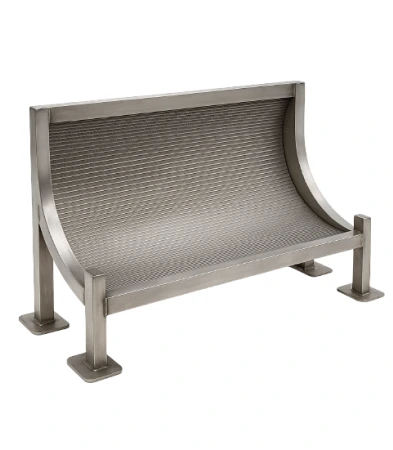
Sieve bends are often the first choice when you need fast, gravity-based separation. Think of them like a curved ramp that filters as material slides down. The wires are fixed in a slight arc, usually 45° to 60°, which allows slurry to spread evenly and dewater quickly. There are no moving parts. Just flow, separation, and discharge.

We’ve seen them work best in applications where you need to separate liquids from solids fast, such as coal washery plants, food starch processing, and paper pulps. One of our clients in the corn processing industry uses Multitech’s custom sieve bends to remove fiber from slurry before fine screening. It cut their clogging issues by more than half.

Here’s why they work:

  • Tangential flow: Slurry hits the screen at an angle, so liquid passes through, and solids slide down.
  • No clogging: The wedge shape prevents particles from getting stuck.
  • Low maintenance: No moving parts means fewer breakdowns.

At Multitech, we make sieve bends with customizable arc angles, slot openings, and materials like SS316 or duplex. The flexibility helps clients fine-tune separation without overhauling their entire system.

sieve-bend

Sieve bends aren’t perfect for every setup. They rely on gravity and open channel flow. So, if you’re dealing with pressurized systems or enclosed vessels, they may not fit. But when space and simplicity matter, this format usually wins.

Cylindrical Screens: High-Capacity Filtration in Rotary Systems

Cylindrical screens are built for continuous, high-throughput processes. Picture a drum or basket made entirely of wedge wire, spinning or rotating while liquid flows through. These are the backbone of rotary vacuum drum filters, centrifuge baskets, and internally-fed rotary screens. They are not flashy, but they handle a lot – and they don’t slow down.

At Multitech Engineers, we have supplied cylindrical wedge wire screens for clients in pulp & paper, chemical slurry treatment, and ethanol production. One client running a rotary vacuum drum filter saw a 20% improvement in throughput just by switching from a perforated sheet to a wedge wire drum. Less blinding, better flow.

Rotary Drum Screen

What makes cylindrical wedge wire formats effective:

  • Large open area: More surface area equals faster filtration.
  • Internal or external feed options: These can be adapted to suit how your fluid enters.
  • Structural strength: Designed to hold pressure and maintain shape under stress.

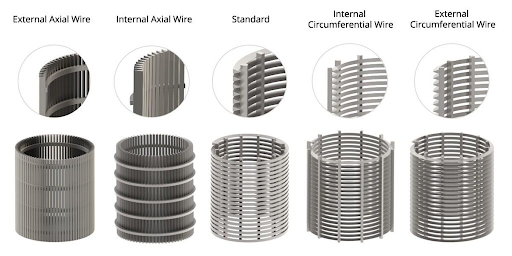
The wedge wires are welded to support rods, either radially or axially, depending on the flow direction. We offer diameters from 100 mm to 1200 mm and slot openings down to 0.05 mm. It is enough to capture fine particles without cutting flow.

Cylindrical screens are especially useful when space is tight, but flow demand is high. They sit inside tanks or vessels and often rotate continuously. That means you get ongoing filtration without needing to stop and clean.

Still, they’re not ideal for batch processes or systems with frequent changeovers. They do their best work when installed and left to run.

Wedge Wire Nozzles: Targeted Filtration in Pressurized Systems

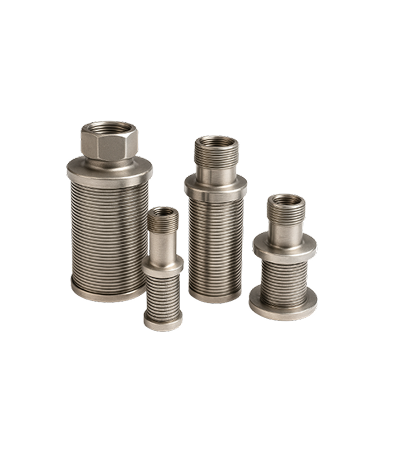
Wedge wire nozzles are compact but powerful. You will find them inside filter beds, pressure vessels, and distribution systems. They are built to handle pressurized flow, control backwash, and prevent media loss. Even though they are small, their role in system reliability is big.

A nozzle is a short cylinder with wedge wire wrapped around it and sealed at the end. Also, with threads, nuts, or flanges depending on how it’s mounted.

At Multitech Engineers, we design these nozzles for use in water treatment, ion exchange units, and chemical processing plants. In one case, a client in pharma replaced a perforated strainer with wedge wire nozzles inside a resin trap. The result? Fewer blockages, less downtime, and easier cleaning.

nozzels-strainer

Why wedge wire nozzles work well in closed systems:

  • Uniform flow distribution: Helps avoid channeling or dead zones in media beds.
  • High strength: Can take on pressure without deformation.
  • Custom slots: As fine as 0.1 mm, depending on filtration needs.

We also manufacture nozzles for header and lateral systems. These are often installed in groups – 10, 20, or even 100. It depends on the tank size. The spacing, flow rate, and slot size all have to match precisely to avoid uneven flow.

Wedge wire nozzles may not move a lot of volume individually, but together, they create highly reliable filtration systems that can run for months with minimal maintenance.

They are the quiet workhorses – and when designed right, they just don’t fail.

Which Wedge Wire Format Fits Your Process?

Choosing the right wedge wire format is not just about specs. It is about how your system runs. Flow direction, solids load, cleaning cycles, space, and budget. Here’s a straight comparison:

Application Type Best Format Why It Works
Slurry dewatering (coal, starch) Sieve Bends Fast separation using gravity; low maintenance
Continuous high-volume filtering Cylindrical Screens Handles more flow; suitable for rotary drums & centrifuges
Closed pressure systems Wedge Wire Nozzles Precise flow control under pressure; prevents media loss
High solids with tight space Sieve Bends or Cylinders Depends on flow rate and available space
Media beds or resin traps Nozzles or Laterals Even distribution with custom layout

If your setup includes open channels or gravity flow, start with a sieve bend. If you are running round-the-clock filtration inside tanks or rotary equipment, a cylindrical screen fits better. And if you are dealing with pressure and distribution inside vessels, nozzles are your best option.

The decision also depends on cleaning access, replacement parts, and how your upstream and downstream equipment are configured.

At Multitech Engineers, we have built systems where multiple formats work together. A sieve bends up front, a rotary cylinder downstream, and nozzles inside the final filtration stage. It all comes down to how the process flows, and what you want out of it.

Multitech Engineers’ Wedge Wire Solutions

At Multitech Engineers, we’ve worked with hundreds of industrial clients – from coal processing units to food-grade filtration systems. Our wedge wire components are built to match the format your process demands. Here’s how our products align with each wedge wire format:

Sieve Bends: Curved Panels for Dewatering and Sizing

Product: Sieve Bends

  • Slot sizes: 0.25 mm to 1 mm (custom options available)
  • Arc angles: 45°, 60°, or per requirement
  • Materials: SS304, SS316L, Duplex Steel
  • Use cases: Coal slurry washery, corn fiber separation, starch dewatering

Related Systems:

Cylindrical Screens: Rotary and Drum-Type Applications

Products:

Use cases:

  • Dewatering in paper mills
  • Thickening slurry in starch or ethanol plants
  • Bulk solids screening and classification

Wedge Wire Nozzles: Flow Control in Pressurized Vessels

Product: Nozzles/Strainers

  • Slot size: 0.1 mm to 1 mm
  • Threaded, flanged, or nut-mount options
  • Designed for resin traps, media tanks, and backwash filters

Related Systems:

Additional Custom Formats

We also manufacture:

If your process does not fit a standard format, we can design one that does.

Why Choose Multitech Engineers

We don’t just sell wedge wire screens. We build solutions that match your exact process. From pressure drop to particle size, and from system layout to cleaning frequency.

Here is what we offer:

  • Custom fabrication: Each screen, nozzle, or panel is built to your specifications
  • Material integrity: We use tested and traceable stainless steel grades, including 316L and duplex
  • Dimensional accuracy: Our screens meet tight tolerances — down to ±0.02 mm on slot openings
  • Full-system compatibility: We design wedge wire formats that integrate with your drums, vessels, or flow systems
  • Real support: You can talk to an engineer — not just a sales rep — when planning your filtration setup

We delivered to clients in Sugar Industry, Starch Industry, Water + Wastewater Treatment Industry, Oil + Mineral Processing, Pulp + Paper Industry and Chemical + Paint Industry. And we have seen firsthand how the right wedge wire format reduces maintenance, improves flow, and keeps production running.

Conclusion:

Choosing the right wedge wire format is not about following a trend. It’s about what works.

Use sieve bends for fast, gravity-based separation
Use cylindrical screens for high-volume, continuous filtration
Use wedge wire nozzles for pressure-based or media bed applications

If you are unsure which format fits your setup, or if you want to upgrade an existing screen, Multitech Engineers can help you figure it out.

📩 Contact us to discuss your filtration process – or request a custom quote.

Visit our Wedge Wire Product Collection »

Slot Size, Profile Shape & Wire Configuration: Customizing Your Wedge Wire Screen for Peak Performance

When it comes to industrial filtration, one solution rarely fits all. Industries like sugar processing, wastewater treatment, pulp and paper, and mineral separation require filtration systems. Customized to their unique material and flow demands. This is where the Wedge Wire Screen stands out —offering design flexibility that gives it a clear advantage over conventional filter types in optimizing operational efficiency.

At Multitech Engineers, we specialize in engineering wedge wire screens with precision — tailoring everything from slot size and wire profile to support rod configuration based on the unique requirements of your process. But why do these design parameters matter so much? And how do they impact performance, lifespan, and total cost of ownership?

In this blog, we’ll break down the core elements of screen customization:

  • How slot size affects flow rate and separation efficiency
  • The role of wire shape in clog resistance and structural strength
  • How support rod spacing and orientation determine mechanical stability
  • Real-world logic across key industries like sugar, starch, minerals, and wastewater
  • Design examples and selection guidelines to help you make better choices

Whether you’re designing a new system or upgrading an existing one, understanding the science of screen customization can save you downtime, energy, and headaches in the long run.

Understanding Slot Size: The Gateway to Performance

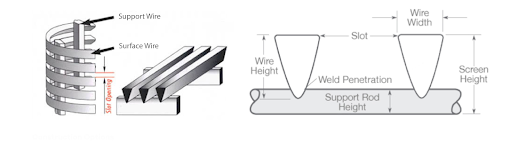
The slot size in a wedge wire screen is the width of the opening between two adjacent wedge wires. This dimension plays a pivotal role in defining what particles are retained or passed through, influencing separation efficiency, flow rate, and screen longevity.

Why Slot Size Matters

  • Separation Efficiency: A smaller slot size can capture finer particles, which is essential in processes like tertiary wastewater treatment or starch extraction. However, undersizing can lead to clogging and reduced throughput.
  • Flow Capacity: Larger slots offer higher flow capacity but lower filtration precision. Finding the right balance between flow rate and particle retention is key to screen optimization.
  • Maintenance and Fouling: Incorrect slot sizing leads to frequent backwashing or manual cleaning—especially in slurry-heavy processes such as mineral dewatering or raw sugar juice screening.
Industry Application Area Typical Slot Size (mm)
Sugar Processing Juice screening, molasses filtration 0.5 – 1.2
Starch Processing Fiber separation, slurry thickening 0.3 – 0.7
Minerals Dewatering, ore separation 0.2 – 1.0
Pulp & Paper Fiber recovery, water recycling 0.15 – 0.6
Water & Wastewater Inlet screening, sludge treatment 0.25 – 1.5

Wedge Wire Screen

Profile Wire Shapes: Balancing Flow, Strength & Fouling Resistance

While slot size determines what passes through the screen, the profile wire shape influences how fluid interacts with the screen surface — directly impacting flow rate, clogging tendencies, and structural durability.

Wedge wire screens typically use triangular or trapezoidal-shaped wires, often referred to as “wedge” profiles. These aren’t just aesthetic decisions — they’re engineered for performance.

Common Profile Wire Shapes

Profile Type Description Ideal For
V-shaped (Standard Wedge) Narrower at the top, wider at the base General filtration, self-cleaning
Trapezoidal Flat top, wider base High-pressure or structural loads
Round or Modified V Semi-curved surface Minimal turbulence, low-flow zones

How Profile Shape Impacts Performance

  • Self-Cleaning Effect: The V-shape naturally forces particles away from the screen, reducing blinding and fouling — especially helpful in pulp, starch, or raw wastewater flows.
  • Open Area Optimization: A sharper profile provides greater open area per unit length, allowing more fluid to pass without compromising structural strength.
  • Mechanical Load Distribution: Trapezoidal profiles offer better mechanical support in high-pressure or abrasive slurry environments.
  • Debris Shedding: Round-top wires minimize buildup and are effective in low-turbulence zones but may have slightly reduced particle separation precision.

Matching Profile to Process

Industry Process Type Recommended Wire Profile
Sugar & Starch Sticky, fibrous slurries Standard V-shape
Minerals Abrasive, high-density Trapezoidal or heavy-duty V
Pulp & Paper Light fiber flows V-shaped or round-top
Wastewater Variable solids & pH V-shaped or trapezoidal

Wedge Wire Surface Profile & Support Profile Selection

Wedge Wire Screen

Support Rod Configuration & Screen Integrity

While slot size and wire shape control filtration behavior, the support rod configuration provides the essential backbone of a wedge wire screen. These rods — placed beneath the profile wires — bear the mechanical load, resist deformation, and maintain structural alignment under pressure.

The number, spacing, and orientation of support rods determine how well a screen can handle hydraulic load, vibration, and thermal expansion — especially in continuous-flow and abrasive conditions.

Types of Support Rod Configurations

Configuration Type Description Best Used For
Horizontal (Parallel) Rods run parallel to flow direction Slurry dewatering, high-impact flows
Vertical (Perpendicular) Rods run across the flow direction Gravity-fed sieve bends, nozzles
Radial or Spiral Curved orientation (in cylindrical drums) Rotary screens, pressure vessels


Design Considerations

      • Rod Spacing: Tighter rod spacing increases strength and reduces deflection — essential for high-pressure or large-width panels.
      • Rod Shape & Material: Support rods may be round, flat, or rectangular. Selection depends on screen size, mounting surface, temperature range, and chemical compatibility.
      • Weld Integrity: The profile wire-to-support rod weld must withstand operational stress without cracking, especially under cyclic loading or thermal shock.

Customization Impact

A well-engineered support rod layout ensures:

      • Higher mechanical stability under flow surges
      • Reduced screen failure in vibrating or rotary machinery
      • Longer service life in aggressive process environments

At Multitech, we configure every screen’s internal support structure based on your panel dimensions, application environment, and mechanical load profile, ensuring both reliability and manufacturability.

Wedge Wire Screen

Designing for Your Industry: Sample Screen Layouts & Custom Engineering in Action

Every industry presents its own set of filtration challenges — from fibrous organic material to abrasive ore particles and variable pH effluents. That’s why custom-engineered wedge wire screens outperform off-the-shelf options in terms of performance, durability, and ROI.

Sample Layouts by Industry

Industry Slot Size (mm) Wire Profile Support Rods Notes
Sugar 0.7 – 1.2 V-shape Vertical (5–10 mm spacing) High flow, fibrous juice, mild corrosion
Minerals 0.3 – 1.0 Trapezoidal Horizontal (4–6 mm spacing) High abrasion, requires hard welds or duplex steel
Pulp & Paper 0.2 – 0.5 Round or V-shape Vertical (6–8 mm spacing) Fiber-rich return water, self-cleaning preferred
Wastewater 0.25 – 1.5 V-shape or Trapezoidal Vertical or Spiral Varies by pH, solids load, and treatment flow
Starch 0.3 – 0.6 Sharp V-shape Horizontal (5 mm spacing) Sticky flows, prone to blinding


Our Custom Engineering Workflow at Multitech

      1. Requirement Gathering: Application form + call with our technical team
      2. Process Parameter Review: Flow rate, solids load, pH, pressure
      3. CAD Design + Wire Selection: Based on filtration goal and screen dimensions
      4. Sample Visual + Quote: Includes a layout sketch and technical datasheet
      5. Manufacturing & QC: Fabricated in-house with post-weld inspection
      6. Dispatch & Technical Support: Documentation + maintenance advice included

When you work with Multitech, you’re not just buying a screen — you’re investing in a tailored filtration solution designed for maximum efficiency in your unique process environment.

Conclusion: The Power of Precision in Filtration

Customizing your wedge wire screen isn’t just about selecting components — it’s about engineering long-term reliability, efficiency, and cost savings into your filtration process.

From choosing the right slot size for your solids load, to picking a wire shape that enhances self-cleaning, to configuring support rods that handle real-world flow dynamics — every design decision adds value. These aren’t just technical tweaks — they are the difference between a screen that lasts 3 years and one that performs flawlessly for 8+ years.

At Multitech Engineers, we don’t just manufacture screens — we build solutions. Our in-house design team, advanced manufacturing setup, and process-specific expertise allow us to deliver screens tailored to your exact process requirements.

Ready to Customize Your Next Screen?
📞 Talk to our technical sales team to share your process parameters
🧪 Request a trial screen or consultation for your current application
🔗 Explore our manufacturing capabilities to see what sets us apart

Whether you’re building a new filtration line or retrofitting an existing unit, custom engineering is the key to better uptime, lower maintenance, and higher ROI.

Let’s build it better — together.

How Procurement Teams Can Evaluate Wedge Wire Screen Filter: A 2025 Buyer’s Guide

A Wedge Wire Screen Filter isn’t just a piece of metal. It’s a performance part.

Most procurement teams don’t buy filters every day. But when they do, the pressure is real.

It’s not just about finding a supplier. You need the right product, the right spec, and a partner who understands why that matters. If the filter fails, the entire operation can slow down – or stop. That’s downtime nobody wants to explain.

In 2025, with tighter budgets and rising demand, smart buying is more important than ever. And that starts with knowing what to look for.

We manufacture these filters. We’ve worked with engineers in wastewater plants, mining sites, food processors, chemical units, and pharma companies. We’ve seen what goes wrong when procurement picks the wrong product – and what works when they get it right.

This guide is not fluff. It’s the checklist we wish every buyer had on their desk.

What is a Wedge Wire Screen Filter?

A Wedge Wire Screen Filter looks simple. But it works hard.

Picture this: hundreds of precise V-shaped wires, welded in perfect alignment. The shape lets liquid pass while blocking solids. The angle reduces clogging. That’s the point.

This design makes it stronger than mesh or perforated sheets. It handles pressure better. It lasts longer. And it gives you cleaner separation with less downtime.

These filters are used in:

Each job has its own pressure, flow rate, and contamination level. That’s why not all wedge wire filters are built the same.

You will see filters shaped like tubes, panels, baskets, or even nozzles. We make all of them. Each one is tuned for its task.

10 Criteria to Evaluate a Wedge Wire Screen Filter in 2025

1. Material Grade

Start with the metal. It’s the foundation.

Most wedge wire filters use stainless steel, but not all stainless is the same. SS304 is common and cost-effective. SS316L offers better corrosion resistance. Especially in salty, acidic, or chemical-heavy environments.

In oil and gas or marine use, duplex steel or special alloys may be needed. Overlooking this can cost you later. Corroded filters need early replacement and can damage the entire system.

Wedge Wire Screen Filter Wedge Wire Screen Filter

At Multitech Engineers, we guide clients to the right material based on their industry. We’ve even helped teams switch to better materials that saved them thousands over time.

2. Slot Size & Open Area

Slot size defines what gets through and what doesn’t. It’s measured in millimeters, sometimes microns.

A smaller slot blocks finer particles but may clog faster. A larger one flows better but lets more solids pass. You need the balance that fits your application.

For example:

  • In wastewater, 0.25 mm to 1.5 mm slots are typical.
  • In sugar and pulp processing, the slot may go up to 3 mm.
  • In pharma or resin traps, it could be as tight as 0.1 mm.

Open area matters too. It’s the percentage of space where liquid can flow. More open area = less pressure drop and better throughput.

At Multitech Engineers, we build filters with custom slot widths. Some are as tight as 0.05 mm, based on the flow rate and filtration level our client needs.

3. Mechanical Strength & Welding Quality

A wedge wire screen filter may look like a simple part. But it’s under constant stress – fluid pressure, vibration, thermal changes.

That’s why the build quality matters.

Each wedge wire must be welded with precision. A weak weld breaks over time. Once it fails, particles pass through, systems clog, and operations stop.

Some low-cost filters skip steps. We’ve seen baskets where the wires popped loose after just two months of use. That’s not a product issue – it’s a fabrication issue.

Wedge Wire Screen Filter

At Multitech, every joint is fusion-welded using jig-based systems. We run hydro tests and check structural load before shipment.

4. Flow Direction Compatibility

Wedge wire filters are designed to work either:

  • Inside-to-outside (e.g., filter tubes where liquid enters from the center)
  • Outside-to-inside (e.g., resin traps or laterals)

Getting the direction wrong causes blockages and premature wear.

In one case, a client installed a screen designed for outward flow in a reverse system. The filter worked for a week. Then it collapsed under pressure. We redesigned it with the correct flow orientation and it ran for 14 months with no failure.

Every system has a flow path. Your filter should match it.

5. Customization Capabilities

Off-the-shelf filters don’t always fit.

Maybe your vessel has a non-standard port. Maybe the flow rate isn’t what typical screens are built for. Or maybe you are replacing an old filter that no one manufactures anymore.

In all these cases, you need custom-built filters.

Multitech Engineers build custom wedge wire screen filters for food-grade tanks, pharma pipelines, oil separators, and much more. We don’t just ship standard items—we help clients design from scratch when needed.

Wedge Wire Screen Filter

Customization might cost more upfront. But it saves headaches later.

6. Cleaning and Maintenance Ease

Some filters are easy to clean. Others become a maintenance nightmare.

When evaluating a wedge wire screen filter, ask:

  • Can it be cleaned without disassembly?
  • Is it compatible with CIP (clean-in-place) systems?
  • Will it clog frequently due to fine slot sizes?

A good design should resist fouling and allow backwashing. If your system processes sticky fluids—like starch, pulp, or oil—you need self-cleaning or quick-flush options.

We design many filters with access hatches or reverse flow capability. That way, you don’t need to shut the plant down every time it clogs.

7. Certifications and Compliance

Industries like food and pharma can’t compromise on safety. Your filter must meet the right standards.

Check if your filter complies with:

  • ISO 9001 (quality management)
  • FDA or EU 10/2011 (food-grade materials)
  • RoHS / REACH (chemical safety)

Wedge Wire Screen Filter

At Multitech, we supply FDA-grade SS316L for food contact and pharma applications. Some projects even need full traceability and mill certificates. We provide those on request.

8. Production Lead Time & Support

In real-world procurement, timelines are tight. You need a vendor who delivers on time—and responds when things change.

Some buyers get stuck waiting 6–8 weeks because their supplier imports the product. That’s avoidable.

We manufacture in-house in India. For repeat clients, we keep common sizes in inventory. And for urgent jobs, we prioritize delivery based on operational risk.

9. Cost vs Value Analysis

Cheap filters often cost more in the long run. They clog faster, break sooner, and need more frequent replacement.

We recommend looking beyond the unit price. Consider:

  • Total operating hours
  • Downtime impact
  • Cleaning frequency
  • Replacement intervals

One of our mining clients switched from an imported filter that failed every 3 months to our custom-built screen. It cost 30% more—but lasted 14 months without failure. That’s the value.

10. Vendor Reputation & Local Manufacturing

You are not just buying a filter – you are choosing a supplier.

Procurement teams need reliable partners. Someone who understands your industry, responds quickly and stands behind the product.

Multitech Engineers is a Make in India manufacturer. We export to 15+ countries, but we are local when it counts. Especially for teams across water treatment, mining, food, pharma, and energy.

Wedge Wire Screen Filter

We don’t just make filters. We help clients solve filtration problems.

Wedge Wire Screen Filter Products We Offer

At Multitech Engineers, we manufacture a full range of wedge wire screen filter products tailored to industrial use. Our filters are used in demanding environments – and built to last.

Here’s a quick look at our product line: https://multitechengineer.com/products/

Each product is customizable in slot width, size, fitting type, and steel grade. You can view them in detail at

Why Choose Multitech Engineers?

We’re not just suppliers – we are manufacturers.
All products are made in India, with in-house quality checks.
We support procurement teams from quote to installation.
We build filters that last because downtime costs more than steel.
And we respond fast. Because delays cost more than quotes.

Conclusion

Buying a wedge wire screen filter is not routine. It affects efficiency, safety, and cost. As a procurement team, the filters you choose must meet both technical and operational needs.

Ask tough questions. Check the specs. Don’t settle for a standard when your process is not.

At Multitech Engineers, we help buyers like you make the right call. Whether it’s one filter or a system-wide replacement—we’re here to help you get it right the first time.

Visit: https://multitechengineer.com/products/
Request a Quote: Contact Us

Get Brochure Now!

Get Quotation Now!